

5 Negotiation Concepts Every Salesperson Should Master

Sales negotiation is not just a collection of tips and tricks to squeeze every last nickel from your customers. It is a mindset that you will maximize your own revenue and profits, and a skill set to create more value for all parties in the process. Effective negotiation training can help you make that happen.
If you want to get good at something, you need training and practice. To be good at negotiating, guess what? You need negotiation training and practice. Great negotiation training helps you more consistently close deals, protect profit margins, and build lasting client relationships. And when it becomes part of your mindset and skill set, it can transform the way you interact with clients, partners, and even your own team.
Let’s explore five key negotiation concepts. Each is a cornerstone for any salesperson looking to excel at negotiations in today’s competitive world.
1. Build Value Through Collaboration and “Growing the Pie”

Old school negotiations were considered a zero-sum game. I win; you lose. Or vice versa. Today’s best negotiation training emphasizes collaboration – working with the other party to find solutions that benefit both sides. That way both parties can uncover hidden opportunities and increase the overall value of the deal for everyone. When you find solutions that benefit both sides, it fosters trust and often leads to more creative, sustainable and satisfying agreements that stick.
- Active Listening: Instead of just thinking about your next talking point, actively listen to the other party’s interests, pressures, needs and constraints. The key to successful negotiations is in what you hear (and what you do about it), not just what you say. Read more about active listening here.
- Shared Problem-Solving: We share the “problem.” I want to sell, you want to buy, and we both want to feel good about the end result. Make the negotiation a joint effort to achieve a mutual goal, not as a battle to be won or lost.
- Transparency: Believe it or not, the more relevant information you share, the more you will receive in return, and the chance of everyone walking away with more value than expected increases dramatically. It’s called “The Negotiator’s Dilemma.”
“Growing the Pie” – Creating More Value for Everyone
Why argue over what appears to be a fixed set of resources or assets, when you can “grow the pie?” Identify opportunities to expand the value of the overall deal so that both parties walk away with more than they expected.
- Uncover Unspoken Needs: There is always something behind the curtain that you don’t initially see. Discover those hidden priorities or constraints.
- Bundle Offers: Combine products or services in ways that add value to the client without eroding your margins.
- Trade Concessions: “I can give you this, if you can give me that.” Don’t be afraid to offer “concessions.” That’s where most additional value is created. Be willing to trade something of lesser value to you that your customer wants, in exchange for something your counterpart might offer that is more valuable to you. Everybody wins.
2. Question Deeply to Understand the Other Side
Open-Ended Deep Questioning
To accomplish the above, you’ll need to have a deeper understanding of your customer than most salespeople do when they’re negotiating. Asking thoughtful, open-ended questions and continuing to “peel the onion” to clarify, is one of the most important and powerful skills you can develop as a negotiator. Learning to probe for deeper insights into your counterpart’s interests and pressures is a hallmark of top-notch negotiation training. You need to avoid incorrect assumptions while uncovering the true motivations of the other party and build empathy and trust, which are crucial for successful negotiations.
Examples of Open-Ended Questions
- “Can you tell me a little more about that?”
- “What specific challenges or opportunities are in front of you right now?”
- “Why is that so important to you right now?”
- “What is the impact of achieving your goals – or conversely, failing to overcome obstacles?”
- “Can you walk me through your decision-making process?”
3. Remember the Issues and Pressures on the Other Side
The fact is, research and experience show that while buyers typically feel more pressure in a negotiation, it is often the sellers who leave more money on the table.
Sure, you want to sell your products and services to make quota (and commissions). But remember what the buyer is dealing with. They may have demanding schedules, projects on hold, regulatory and certification specs to meet, or a boss who is pressuring them to get results. And a growing pile of invoices to deal with once they get your deal done. The buyer is engaged with you right here, right now.
By understanding what’s driving the other side, and the pressures they feel, you can tailor your approach and identify areas to build value for everyone.
Understanding Value Drivers
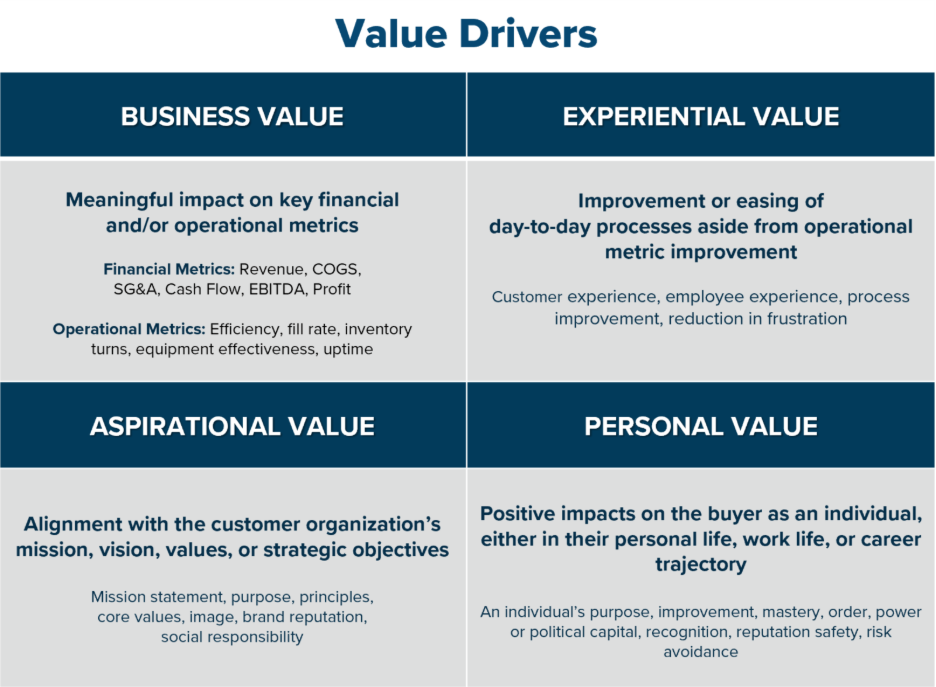
Your counterparts have a variety of motivations when they approach a negotiation. Negotiation training helps you understand what drives their business decisions, making it easier to put yourself in their shoes and appeal to what matters most to them.
- Business Value: Focuses on measurable financial or operational outcomes such as increased revenue, reduced costs, improved efficiency, or risk mitigation.
- Experiential Value: Provides solutions that reduce headaches, simplify operations, or enhance satisfaction, providing strong experiential benefits.
- Aspirational Value: Aligns your solution with the customer’s mission, vision, values, brand reputation, or strategic objectives
- Personal Value – Addresses the individual interests of a specific buyer, such as career advancement, recognition, or relief from personal workload challenges.
Timing & Urgency
When do they want it?
When do they need it?
Your counterpart is probably facing internal and external deadlines and schedules. Some are real, but some may be artificial. Good negotiation training helps salespeople to discover real deadlines and avoid being pressured by artificial ones. While you always want to try to meet customer timing and delivery expectations, unnecessary rushing can compromise accuracy, add expense, and create organizational chaos on both sides.
4. Protecting Profit Margin
Negotiating Expectations, Not Price
Salespeople must learn to negotiate beyond just “price.” If you don’t consider the entire value package you offer, you run the risk of being perceived as just another commodity. True mastery comes means you negotiate the entire package—timelines, service levels, payment terms, and more. This holistic approach protects your profit margin and can lead to mutually beneficial, long-running partnerships and agreements.
At the same time, pointing out the total value you provide helps raise the customer’s expectation of what they will have to pay, without compromising your expectations for the sale price and associated margin.
- Set Clear Expectations: Define deliverables, timelines, and responsibilities early in the negotiation. Make sure everyone is on the same page.
- Offer Value, Not Discounts: Emphasize the unique value your solution provides rather than immediately conceding on price.
5. Resolve Final Concerns and Price Objections
Price objections (we prefer the term “concerns”) are often unavoidable, but skilled negotiators that have the proper negotiation training are prepared to resolve them with confidence. You will be able to identify specific concerns your customers have regarding price and how best to navigate that discussion. Research shows that, depending on product, “price” is less than 20%-30% of the purchasing decision. Trust, expertise, support, education, and ease of doing business are the foundation of a buyer’s perception of value. “Price” just happens to be the first (and easiest) thing for them to bring up as an issue.
Tips for Resolving Price Concerns
- Reframe the Conversation – Shift the focus from cost/price to value/ROI (return on investment) or TCO (total cost of ownership). Remember that the value must be expressed in relevant terms that matter to the customer (their value drivers).
- Conditional Concessions – If you must make a price concession, tie it to a specific concession on the other side (e.g., larger orders, faster payment, ancillary products/services, etc.).
Read more about resolving concerns here.
Conclusion – The Power of Negotiation Training & Practice
If you want to master these negotiation concepts, you have to do more than just read about them. Negotiation training and ongoing practice are the only ways to make these behaviors stick. The best negotiation training programs often use role-playing to help salespeople learn how to apply these principles in the “real world.” It’s better to choke in a practice scenario with a colleague than to lose an actual deal because you haven’t had a chance to practice.
By focusing on collaboration, deep questioning, protecting margins, and relationship building, salespeople can elevate their negotiation performance and deliver greater value to their clients and their own organizations.
Whether you’re new to sales or a seasoned professional, investing in negotiation training is one of the smartest moves you can make for your career. The skills you develop will not only help you close more deals at higher profit margins but also foster stronger, more rewarding business relationships for years to come.
Want to Win More Deals Without Sacrificing Margin?
Negotiation Quotient teaches sales teams how to defend against price pressure, respond to buyer tactics, and create win-win outcomes that protect profitability. Trusted by top-performing teams, this training delivers real-world strategies that stick, leading to fewer discounts and stronger customer relationships.
Request a Demo to see how Negotiation Quotient can elevate your team’s negotiation performance.

Previous
Next