

Yes, Sales Training Can Move the Needle – If You Do It Right!

Sales training doesn’t move the needle on the metrics that matter most, right?
If you seriously believe that you’re either not using the right sales training, not reinforcing or coaching it, or not implementing it effectively.
In this blog post, I’ll explore how the right approach to sales training can drive significant results and ROI. We’ll share real client outcomes and a proven framework to ensure your sales training efforts are successful.
The Proof Is in the Performance
Let’s start with some real-world results from our clients:
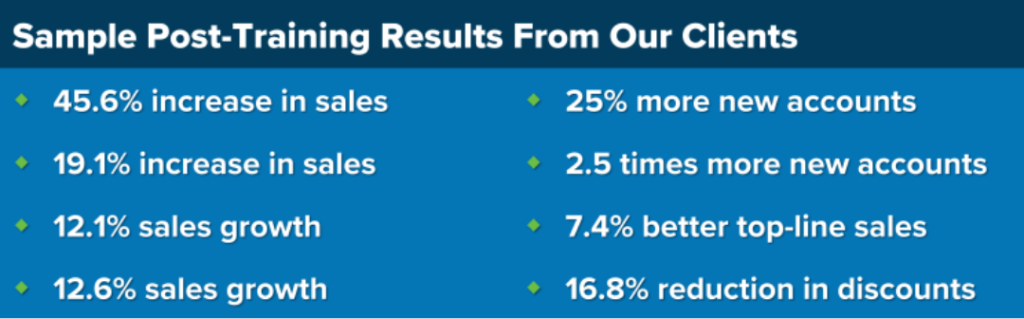
These aren’t outliers, they’re repeatable outcomes.
Do ALL our clients see these results? Nope. No, they do not. But in every case where they don’t, I can trace it back to common issues and choices that led to the outcomes they did receive.
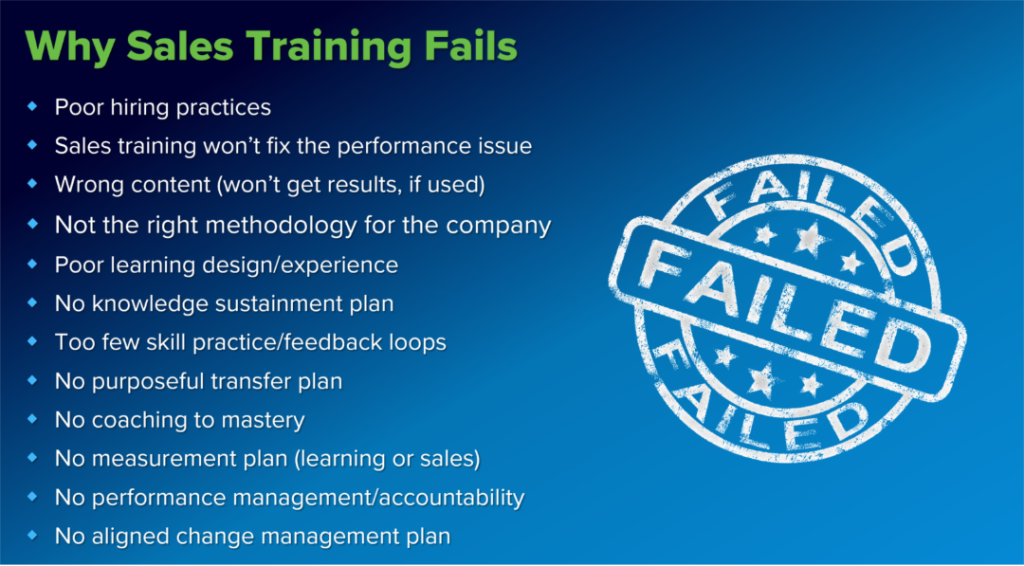
The key is to do the opposite of what you see on the above image. It takes a systematic approach to sales training that includes training the right people (sales hiring effectiveness), the right sales methodology, alignment with the buyer’s journey, full-cycle coverage, great implementation (many of which appear in the image), and ongoing coaching to close skill gaps and achieve high levels of adoption and mastery.
I won’t address everything on the above image in this blog post, but will select a few to highlight and provide examples.
Let’s dig in.
Choose the Right Sales Methodology
Your sales methodology choice is crucial. It should be:
- Modern: Based on changes in B2B buying behavior and what buyers want from sellers today and how selling has evolved (or should).
- Buyer-centric: Operating in the buyers’ best interest, like servant leadership.
- Consultative: Acting as a consultant and trusted advisor, whether using insights to make buyers aware of challenges they should address or doing discovery to understand the current and desired future states in order to recommend the best solution.
- Value-focused: Able to uncover the value desired, plan to deliver it, and articulate the value from the buyers’ perspectives to gain acceptance.
- Outcome-oriented: All of the above is focused on delivering the outcomes that matter to decision makers.
- Proven: Culled from Top-Performer Analysis, best practices, or shown to work in complex B2B environments.
- Business fit: Your methodology should also fit your business, your customers, and the solutions you provide. Selling hardware for data centers or Industrial Internet of Things (IIoT) solutions is going to be different than selling medical devices or industrial bearings.
Interestingly, for companies that sell both bespoke or implementable solutions and also do transactional order flow (being a supplier or doing MRO), you need a methodology that can flex. Meaning, it can be used very deeply and fully for the most complex of sales situations, as well as scaled down to be used in more transactional, less complex settings. We designed Modern Sales Foundations with this in mind, and I wish I saw more methodology vendors doing this.
If your current methodology doesn’t check the above boxes, it’s time to reevaluate. It’s worth it.

Note: To access the above CSO Insights report, click here.
One of my past clients, a middle-market company, was struggling with stagnant sales growth. Their traditional sales approach was product-centric and focused on features rather than solving customer problems. They pitched early and often then focused on “overcoming objections” (that phrase alone makes the hair on the back of my neck stand up – we use “resolve concerns”).
I introduced a problem-focused, consultative selling methodology that emphasized understanding the buyer’s problems and needs first and providing tailored solutions (aka, “diagnose first, then prescribe”). We also taught active listening, empathetic acknowledgements, other-centric communication skills, the mindset of operating in the buyers’ best interests, and how to communicate value in ways that resonated with the buyers, based on how they defined value.
Beyond just doing the training, leadership took it seriously and reinforced, integrated into workflow, and implemented coaching that focused on closing competency gaps and increasing adoption and mastery. They also measured and adjusted as needed and kept “the pedal to the metal” until they got the results they wanted.
- Result: Within six months, their sales team saw a 24% increase in lead-to-opportunity conversions, a 20% increase in closed deals, and a 15% improvement in customer satisfaction scores.
- Related Reading: How Does Your Sales Methodology Compare to What Top Performers Do Differently?
Align Sales Process with the Buyer’s Journey

When your sales process mirrors how your buyers buy, magic happens. You reduce unwanted friction, increase buyer confidence in their decision, and improve conversion and win rates.
Think of it like swimming with the current instead of against it. Selling doesn’t have to be as hard as we make it sometimes.
Research Insight: The Impact of Buyer-Centric Sales Processes
A study by Forrester Research found that companies with buyer-centric sales processes achieve 19% higher win rates and 15% faster sales cycles. By aligning the sales process with the buyer’s journey, sales teams can better anticipate and address both the decision makers’ buying process exit criteria and their concerns, leading to smoother and more successful sales interactions.
- Related Reading: The Perplexing Power of Process & Methodology in Complex B2B Sales
Ensure Full-Cycle Coverage
Your sales methodology must cover the entire customer lifecycle. This ranges from prospecting to opportunity management (ending with gaining purchase agreement) to account management (strategic, key, and territory).
A Word About Negotiating: And speaking of full coverage — let’s be clear: negotiation is not selling. It’s a separate skill set that should only come into play after the selling job is done and the deal can’t be won, as is. “The selling job is done” means that NASA or Need And Solution Alignment has been established, some level of value has been accepted by the buyers, and the seller has attempted to resolve concerns and failed. Then, it’s time to negotiate. If you negotiate price or terms before that, you will almost certainly give away margin or make concessions that you didn’t need to.
Real-World Example: Comprehensive Sales Training for Full-Cycle Success
A regional manufacturing firm implemented a full-cycle sales training program that included prospecting, opportunity management, negotiation, and account management. The result? A 25% increase in new account acquisitions and a 30% improvement in order flow from accounts. By ensuring their sales team was equipped to handle every stage of the customer lifecycle, they achieved sustainable growth and long-term customer relationships.
Build the Right Sales Enablement Infrastructure
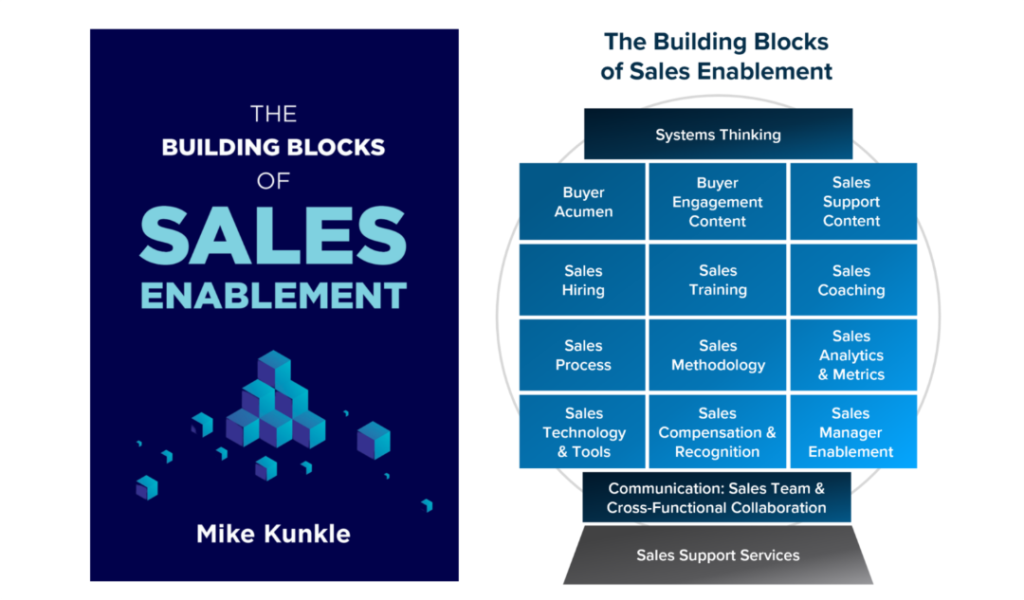
Sales enablement isn’t just about content or training or tools. It’s about building systems that support reps at every stage of the sales cycle.
That includes:
- Relevant content that’s easy to find and use (“Relevant” means that it addresses the questions that buyers have at each stage).
- Training that sticks and produces results.
- A cadence of coaching that delivers continuous improvement.
- Tools that help, not hinder, and reduce sales friction.
- Metrics that matter to both diagnose issues and celebrate successes.
- Sales manager enablement.
- Sales manager enablement (not a typo, I wrote it twice).
- And especially, the replicable, repeatable systems that produce predictable and scalable results:

Research Insight: The ROI of Sales Enablement
According to a study by CSO Insights, companies with a formal sales enablement function achieve 15% higher win rates and 18% higher quota attainment. Similar results have been reported across multiple studies by analysts and sales researchers. By investing in a comprehensive sales enablement infrastructure, organizations can drive consistent and measurable improvements in sales performance.
Related Reading:
- Implementing the Building Blocks of Sales Enablement
- How to Customize The Building Blocks of Sales Enablement to Work for Your Company
Train Managers to Coach
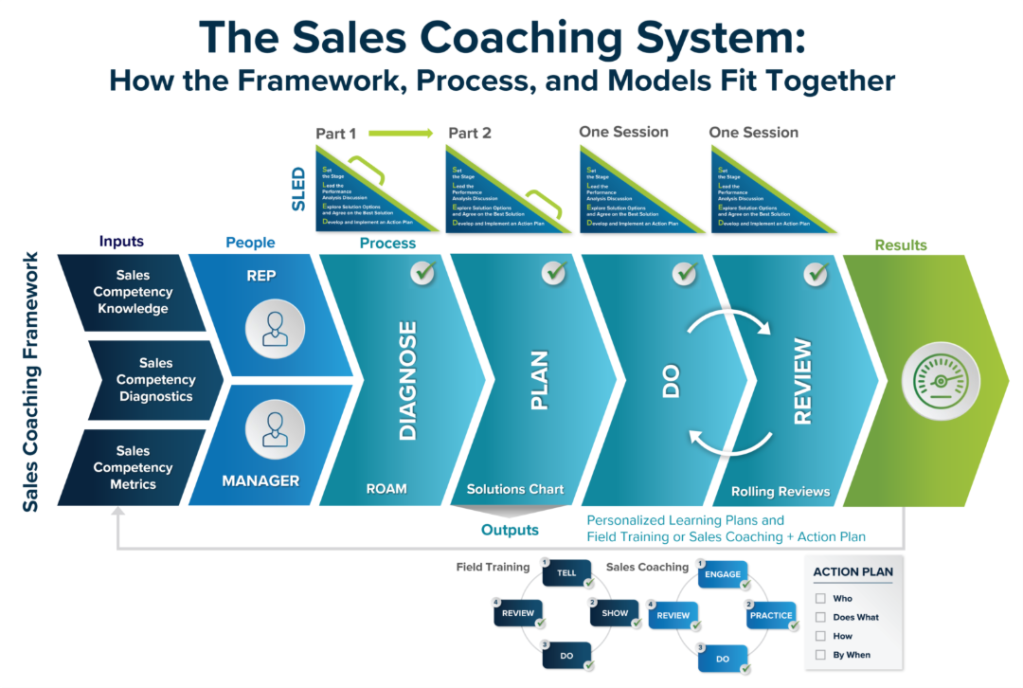
Frontline sales managers are the force multipliers of your sales organization. But only if they know how to coach (and technically, also to train, counsel, and provide feedback — all of which are different skills).
Effective coaching isn’t just about ride-alongs and gut feel or firing off feedback about what to do differently. It’s about structured conversations, data-driven insights, and consistent reinforcement. It’s about skill development and behavior management.
Real-World Example: The Power of Effective Sales Coaching
A financial services company revamped their sales coaching program to focus on data-driven insights and structured coaching sessions. Within a year, they saw a 22% increase in sales productivity and a 17% improvement in employee engagement. By empowering their managers to coach effectively, they got into a cadence of continuous improvement and unlocked the full potential of their sales team.
This is a deep topic, so I will provide a bit more related reading to give you a fuller picture, if you want to dive in deeper.
Related Reading:
- The Mysteries of Sales Coaching Revealed
- How to SLED Through a Coaching Session
- Get Grounded with SOIL to Deliver Better Feedback
- Sales Counseling as a Performance Improvement Tool
Implement a Sales Management Operating System
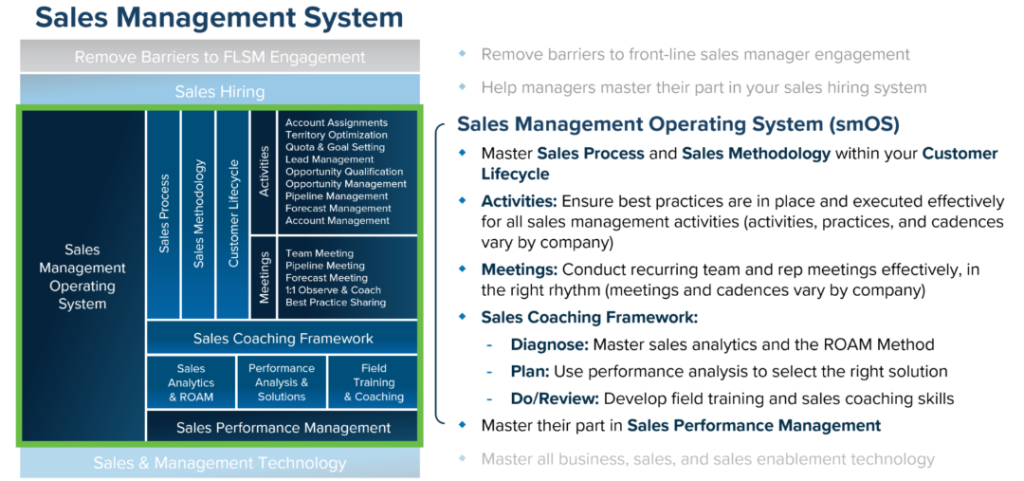
A Sales Management Operating System (smOS) brings structure, cadence, and accountability to your sales organization. It’s the difference between hoping for results and engineering them. The smOS is part of the larger Sales Management System (pictured above with the smOS highlighted). The Activities and Meetings in the graphic are examples and may or may not be the right ones for your company. Leaders need to determine the right Activities and Meetings, the best practices for each, and the expected cadence at which they will occur. This is what creates an operating rhythm, allows managers to fully support their team, and allows sales leaders to inspect what they expect and support their frontline sales managers.
Embedded in the smOS are a full subsystem for sales coaching and the elements of Sales Performance Management (SPM). The SPM bucket is sort of a catch-all for anything not included in Management Activities and Meetings, so in the example there is some overlap. Click the image below to view a larger version.

I just finished the MVP version of a course that includes the full Sales Management System and its embedded smOS. If you’d like to explore this further, see the links in Related Reading or the links under Closing Thoughts.
Research Insight: The Benefits of a Structured Sales Management System
A study by the Sales Management Association found that organizations with a structured sales management system achieve 23% higher sales performance and 19% lower turnover rates. By implementing a smOS, sales leaders can create a predictable and scalable sales environment that drives consistent results.
Related Reading:
- Radically Improve Sales Results with a Sales Management Operating System
- New Sales Management Foundations Course: Download this overview or review more about the MVP version
Hire Right from the Start
As Kurt Lewin posited, B = f(P, E), meaning that behavior is a function of the person and the environment. Performance and quality experts, Geary Rummler and W. Edwards Deming, both pointed out that a bad system will drag down the results of even the best performers. It’s clear: A great environment can help employees perform better than they would otherwise.
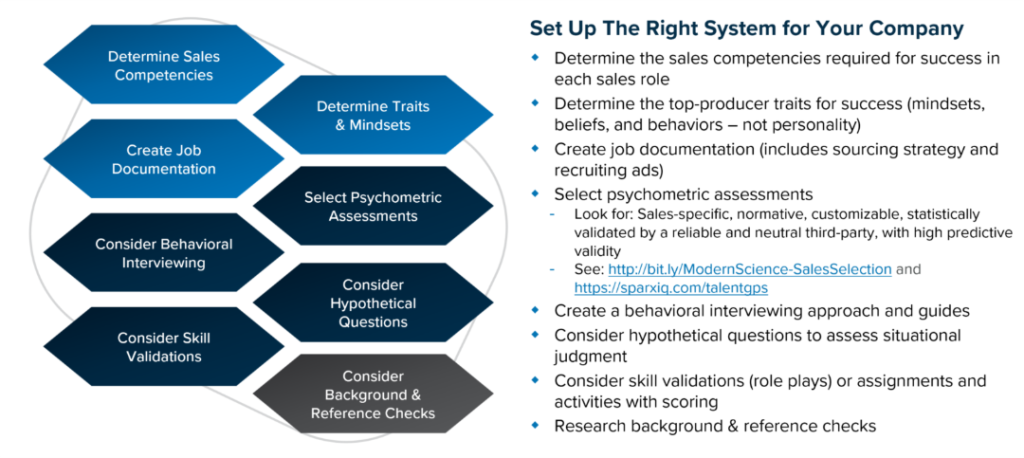
Yet, even the best training, coaching, content, tools, and environment can’t completely fix a bad hire — especially for sales. That’s why your sales hiring system must be rock solid.
The first step in effective sales onboarding is hiring the right person for the role.
That means:
- Ensuring role clarity.
- Identifying the competencies and traits that fuel success in each role.
- Implementing a validated sales hiring assessment.
- Crafting structured interviews (behavioral and hypothetical) with scoring.
- Developing appropriate role plays or simulations.
Real-World Examples: Building a High-Performing Sales Team
A medical device company revamped their sales hiring process to include competency-based interviews, role-specific competency assessments, and simulations. The result? A 31% reduction in first-year new-hire churn, a 45% decrease in new-hire ramp time and a 27% increase in production during onboarding. [NOTE: The onboarding program was already in place and didn’t change — it was the hiring process that evolved.] By hiring the right people from the start, they built a high-performing sales team that consistently exceeded targets.
A B2B financial services firm reduced first-year new-hire churn from 75% down to 9%. Combined with effective onboarding upgrades (training, coaching, content, tools, and environment), the more-effective hiring system contributed to cutting the ramp time in half and doubling the new hires’ production during the reduced ramp, compared to the previous production over a longer ramp.
- Related Reading: Advice You Need to Hear About Hiring Salespeople
- Download: The Sales Hiring System
Use a Sales Training System
Lastly, I’d be remiss if I didn’t mention my own Sales Training System, from The Building Blocks of Sales Enablement. I’ve written so much about this, I almost didn’t include it today, but I honestly can’t not at least mention it.
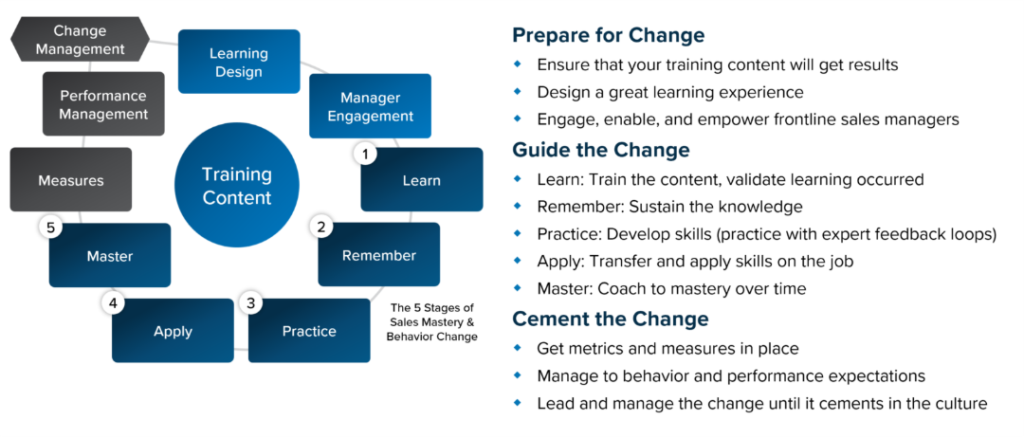
If you scroll up, you’ll see a graphic including the reasons sales training fails. This training system is the antidote for those deadly reasons.
Rather than explain it in detail here, I’ll leave you with a simple mention and a few resources:
Related Reading:
- How to Get Business Value from Sales Training
- How to Get Your Sales Training to Stick and Produce an ROI
- Stop Wasting Money on Sales Training
Closing Thoughts
Sales training can lift performance and drive ROI when it’s part of a systematic approach. The results speak for themselves. You need to decide why you are doing training and where you fall on the sliding scale below and then act accordingly.

When you’re ready to get serious about improving results with sales hiring or sales and sales management training using a systematic approach, here’s some additional information and ways to contact me.
- Sales Hiring: See: this Whitepaper or this Website
- Modern Sales Foundations: Website or Digital Solution Room
- Negotiation Quotient: Website or Digital Solution Room (NQ + others; scroll down)
- Sales Coaching Excellence: Website or Digital Solution Room
- Sales Management Foundations: Download this overview or review more about the MVP version
- Contact Mike: Either reach out here on LinkedIn or use our Contact form
You can find Mike’s original newsletter post here.

Previous
Next