

Value Engineering for Opportunity Management & Account Growth

Today, I want to talk about the concept of Value Engineering or understanding how to:
- Identify and confirm what value means from the customer’s perspective (and it may be different for individual influencers and decision makers in the same opportunity or account).
- Co-create value together, whenever possible, or at a minimum, create value based on what you learn.
- Communicate that value effectively in different ways (becoming a “multilingual” seller who can speak about one solution multiple ways based on what the listener values).
- Confirm your prospect’s or customer’s acceptance of the value.
Far too many B2B salespeople ignore or miss these steps when managing complex opportunities or accounts with multiple influencers and decision makers. Less-effective salespeople do the same thing, the same way, in every sales process stage, with the same buyers, every time. In contrast, top sales performers excel at managing nuances, details, and other-centric communication.
If you want to radically improve your win-rates and account growth, these are the concepts and skills used by those top 1-4% of sales performers. I uncovered these principles during a dozen Top-Performer Analyses that I conducted over a 16-year period. The concepts and graphics below are all now included in my Modern Sales Foundations course.
I’m also going to handle this somewhat differently than my typical newsletter. I will minimize prose other than a few introductory comments and possibly some transitions. I believe the images will speak for themselves. I’d be curious to hear what you think of this approach — comment or InMail me with your feedback, if you’re willing.
Let’s dig in.
Understanding Value from the Customer’s Perspective
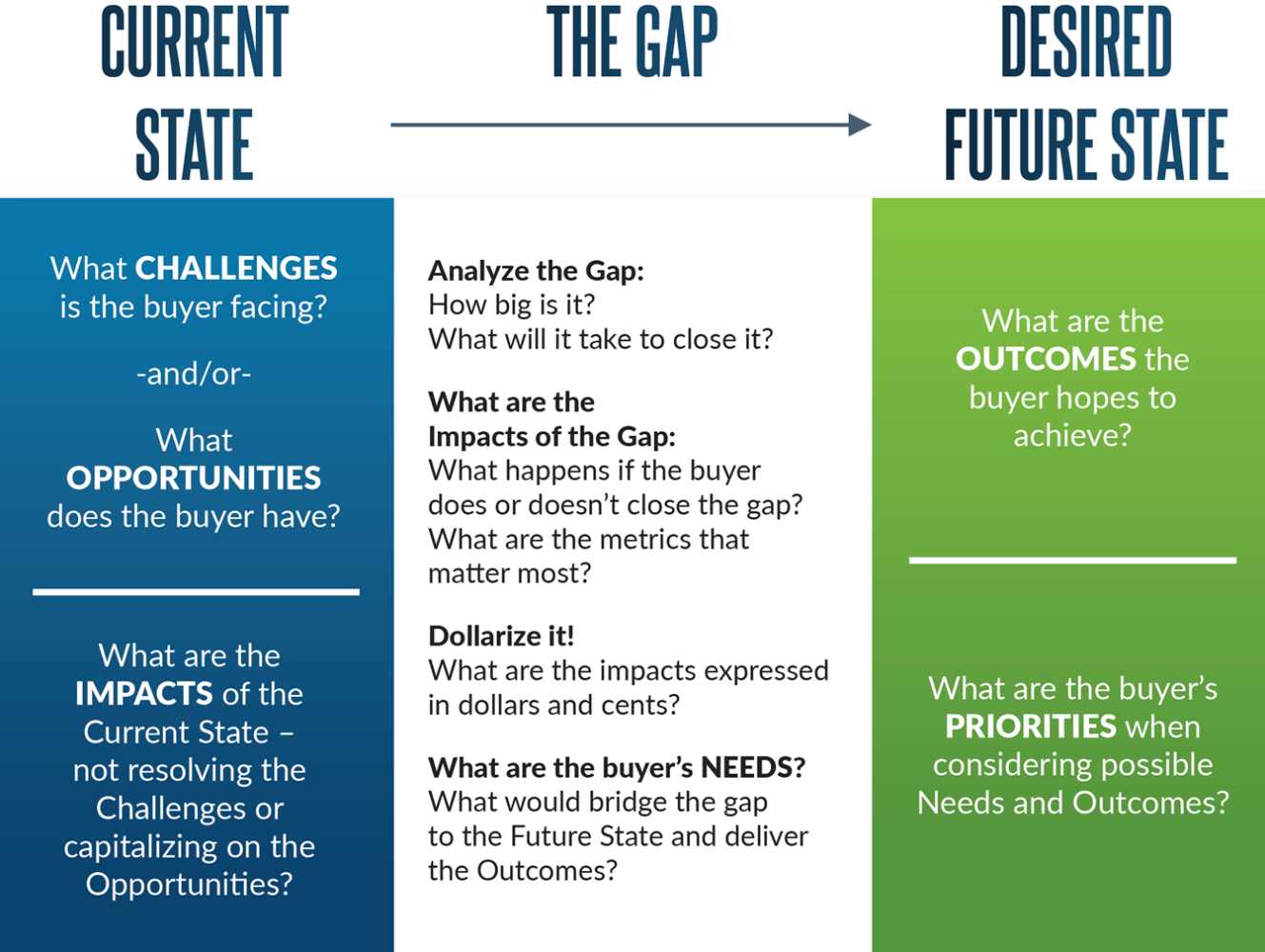
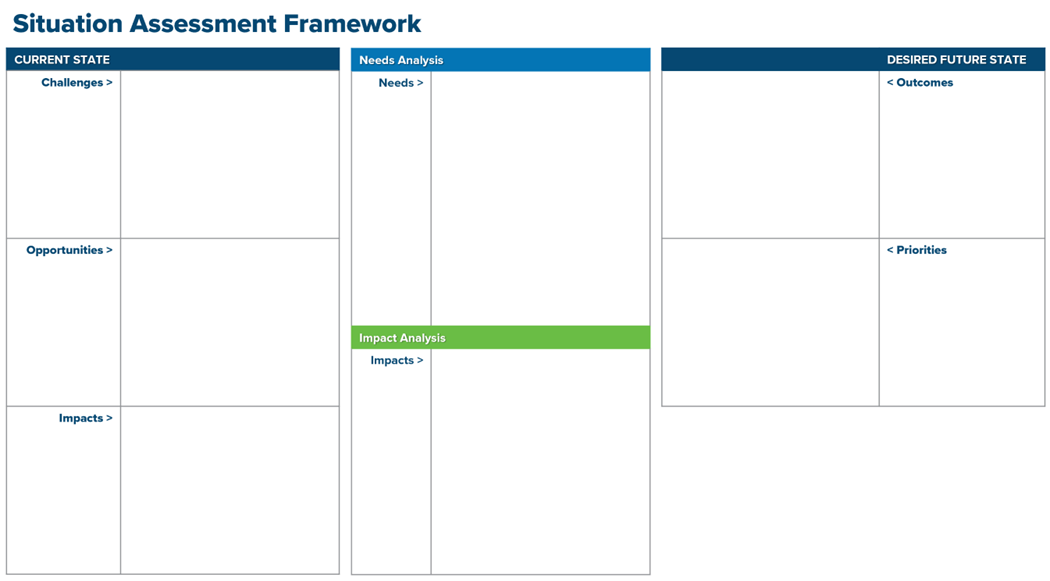
Conducting a Situation Assessment
A Situation Assessment lays the groundwork for deeply understanding the current state and desired future state, using that framework with COIN-OP: Challenges, Opportunities, Impacts, Needs, Outcomes, and Priorities.
Understanding Value Drivers
Value Drivers help you categorize what matters most to an individual (what interests them). It’s not always just one type of value. The Bain B2B Value Pyramid lists about 40. I’ve found that this four-quadrant simplification buckets them well enough and is far easier to work with. For more on the Personal Value Drivers, see this post, about a third of the way down: Influencing Seller Behaviors to Drive Change – A Guide for Sales Managers

Understanding the Buyer Types
This is just another lens into what matters to different buyers. It’s not carved in stone, but Financial Buyers often have a primary Value Driver of Business Value. For Feasibility Buyers it’s often Experiential, and For Functional Buyers it’s often Experiential or Personal Value. Don’t assume, though. The idea is to get clarity in reality.

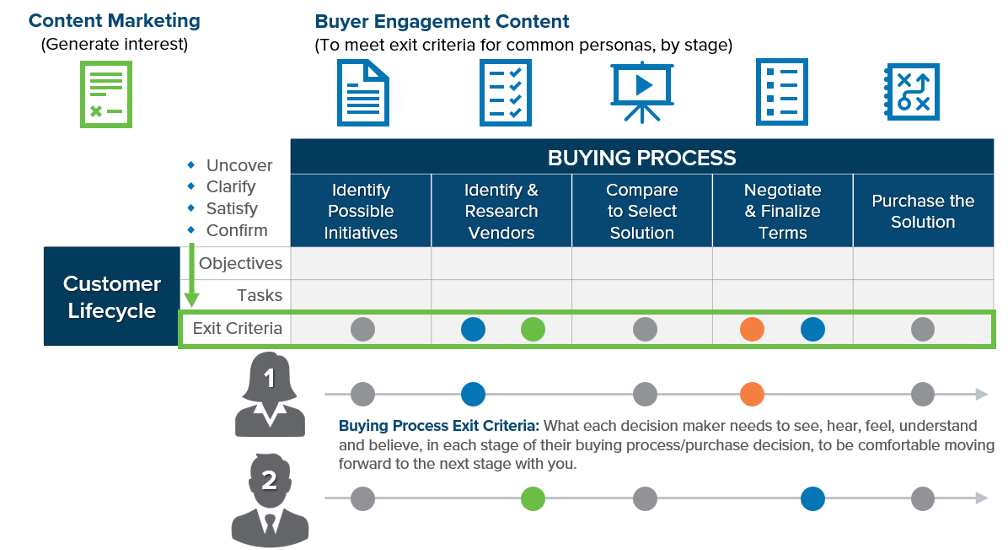
Understanding and Managing Buying Process Exit Criteria
Buying Process Exit Criteria is what each decision maker needs to see, hear, feel, understand, or believe, in each stage of their buying process/purchase decision, to feel comfortable moving forward to the next stage with you. BPEC may be the same or may vary by buyer. To read more about how this impacts process management, see: Even if They’re Non-Linear, the Buying/Selling Processes Can be Managed
Communicating Value from the Customer’s Perspective
Using POSE Value Stories
POSE Value Stories can be used effectively in prospecting (with checks or confirmations after the P and O) or at any point when you’re summarizing what you’re working on, introducing new decision makers to a project, or presenting solutions to try them back to the problem they solve. In some cases (voicemail or presentations as two possible examples, sellers can drop the E.

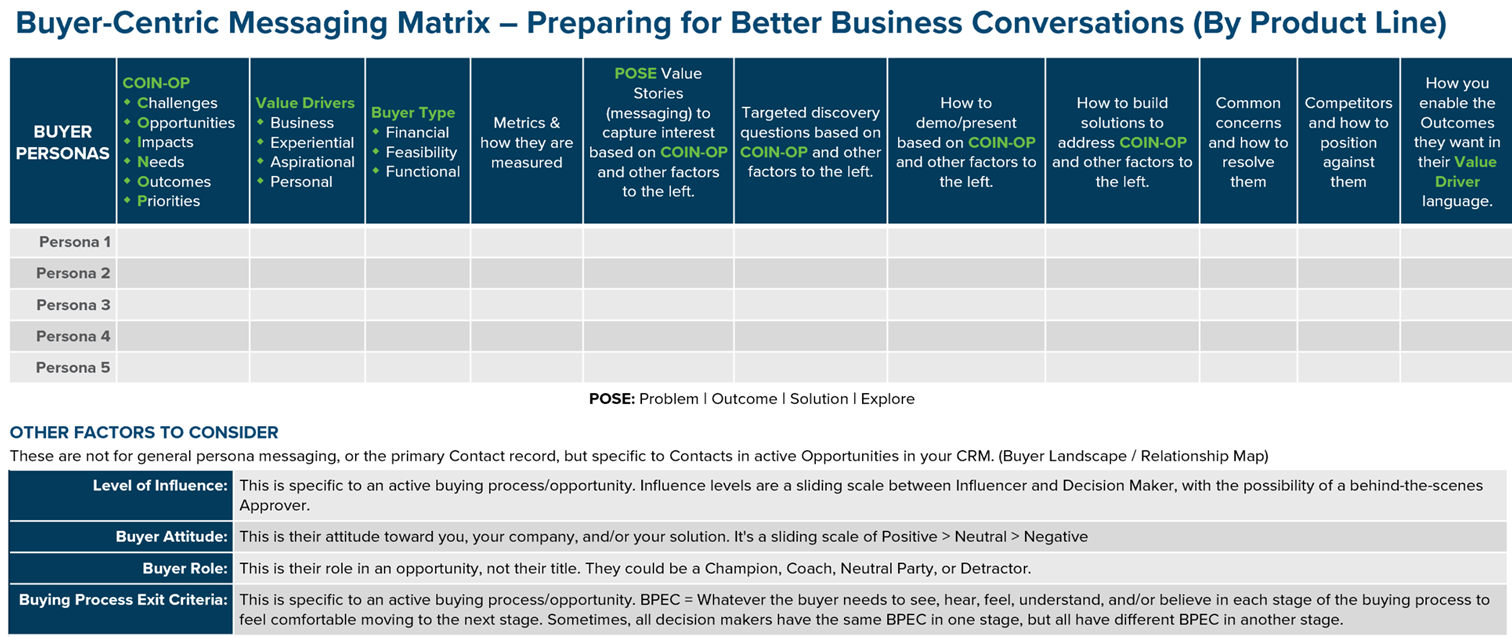
Shifting to Buyer-Centric, Value Messaging
This chart has mined gold for me. It’s especially helpful for Product Marketing to use when developing messaging or training sellers but is also key when sellers are thinking about how to message appropriately. You’ll note that COIN-OP, Value Drivers, Buyer Types and POSE Value Stories are included. This is not something that people usually pick up easily — it takes thought, practice, feedback, and coaching, but it is a real game-changer. (As with many of the images, you can click the image to view a larger version.)
Co-Creating Solutions (Value)
Using the above knowledge and working with your prospect or customer, you can often co-create value together, even during a simpler, transactional sale, by engaging your buyer in the journey and making decisions along the way.

Assessing How Well It’s Working (and What to Do About It)
Assessing and Navigating the Buyer or Customer Landscape
Whether you are managing an opportunity with multiple influencers and decision makers, or managing an account, assessing and navigating the relationships from various angles is not only helpful but tells you where to focus your efforts to remove barriers and improve the chance of winning the sales or growing the account.

Identifying How to Add More Value (What to Upsell/Cross Sell)
If you sell multiple products or services, this chart will be helpful to identify the cues and clues that you can solve another problem for your client, with another solution. Just going through the process of completing the chart can be eye-opening and it becomes a useful tool for account reviews and preparing for Customer Value Reviews (my term for QBRs).

Managing Accounts More Effectively
Setting Account Objectives
Think about it. There are only five things that you can do with an account: Acquire it, Maintain it (if there’s no growth potential), Grow it, Recover it (if ongoing business is slowing down or they don’t renew — I’ve also called this Reactivate), and when it no longer makes sense to do business with an account, Retire it.

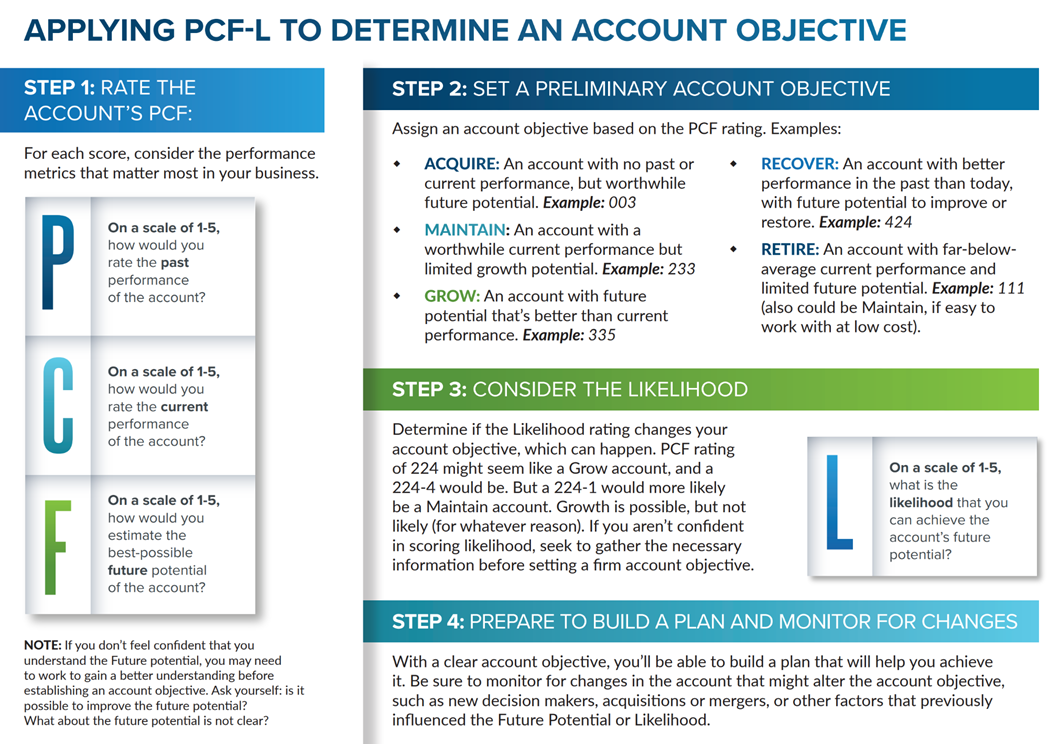
I’ve seen PCF-L analysis help sellers get crystal clear on what to do with an account (the account objective) and where to spend their time (prioritization across accounts and within an account). The depth of the analysis and time spent doing this should be based on the strategic or financial value of the account. Some require days; others can be done on the back of a napkin over lunch. Some organizations develop a structured scoring system (this is a 1, this is a 2, etc.) and automate the scoring with business intelligence tools. Others have reps do their best to determine what the scoring should be. I prefer the former, but I’ve seen the latter work, as long as the account manager has some sense of reality and doesn’t live in La-La Land.
Developing Account Plans to Achieve the Objectives
Conducting a Force Field Analysis to Assess an Account
After setting the objective, you can use what you know about the account, including the landscape map, to determine what is in your favor and driving you toward the desired future state you want with the account, and what restraining forces might be holding you back. Anything that you need to know or should know that you don’t, should be listed as a restraining force. The same rule applies here as it did during PCF-L analysis. Plans should be detailed according to the strategic or financial value (or future financial value) of the account. Once again, sellers may spend days on one plan, or complete 3-4 over lunch on the back of a placement.

Creating an Account Plan Based on the Force Field Analysis
With the account objective set and the Force Field Analysis complete, ask two simple questions:
- What can I do to reduce or eliminate the Restraining Forces? (Take your foot off the brake pedal)
- What can I do to strengthen the Driving Forces? (Push harder on the gas pedal)
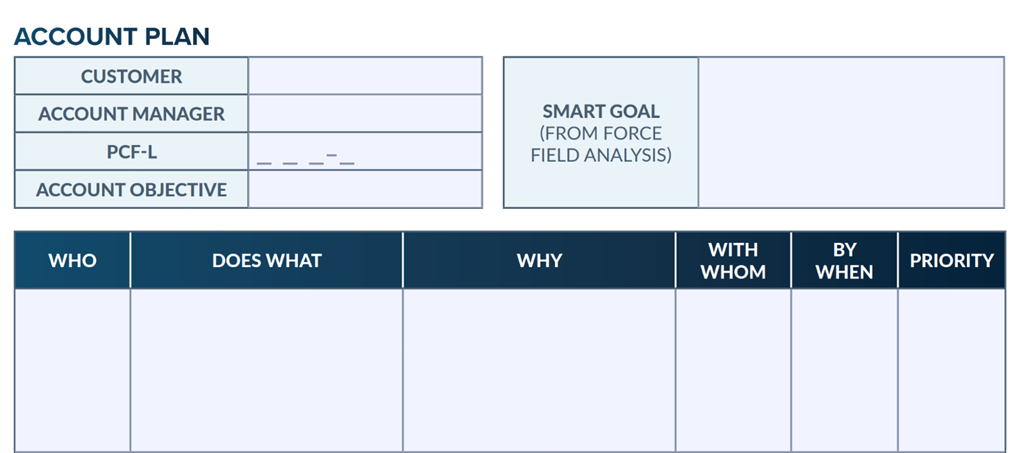
This builds your account plan that will sync to the Account Objective you set.
As with Setting Account Objectives and Conducting a Force Field Analysis, sellers may spend days on one account plan, or document a few sentences, based on the value of the account.
Conducting Customer Value Reviews
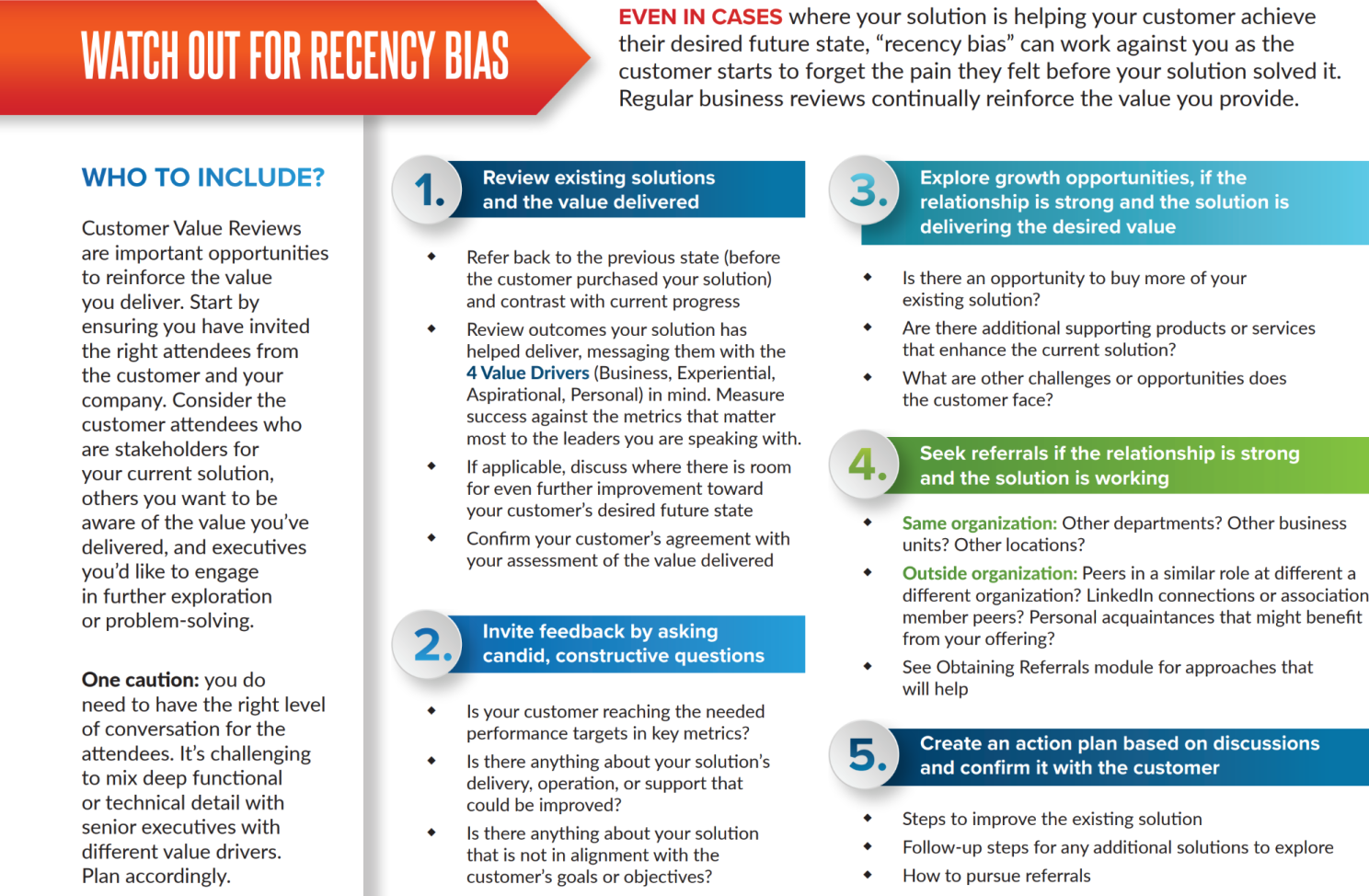
Conducting Customer Value Reviews (you may call them Quarterly Business Reviews) allows you to ensure the value you delivered is recognized and accepted by the customer, gives you an opportunity to address anything uncovered in your Buyer Landscape analysis, and uncovers opportunities for growth (including via referrals).
Closing Thoughts
As we wrap up this post, I hope you’re walking away with a fresh perspective on what it truly means to engineer value from the customer’s point of view, not just our own. If there’s one thing I’ve learned over the years, it’s that the best sales professionals don’t just sell solutions. They co-create value, communicate it in ways that resonate, and confirm that it’s recognized by every influencer and decision maker in the room or virtual meeting.
Remember, the frameworks and tools we covered aren’t just theory, they’re practical, field-tested, and proven by top performers. Whether you’re mapping out a situation assessment, tailoring your messaging, or setting account objectives, the real magic happens when you put these concepts into action and adapt them to the nuances of each opportunity.
So, here’s my challenge for you: After reading this post, I encourage you to take a step back and assess how well your sales force is applying the principles and practices we’ve covered. Does your sales team truly understand value from the customer’s perspective? Are they co-creating solutions, communicating value in buyer-centric ways, and managing accounts with intention and rigor?
If you spot opportunities for improvement—or if you realize there’s a gap between where you are and where you want to be—don’t try to reinvent the wheel. Reach out to me directly here on LinkedIn or use the contact form at https://modernsalesfoundations.com/contact/. Let’s talk about how Modern Sales Foundations can help you close those gaps and drive real results.
This post was originally published as a LinkedIn newsletter, which you can find here.

Previous
Next