

Stop Using Sales Techniques and Start Communicating Authentically!

Today, I want to share a message that’s very important to me. I feel like I’ve been shouting it from the rooftops forever, without making much of a dent in the universe. But I don’t let that stop me, because I care deeply about the future of our sales profession.
It’s time to stop relying on outdated sales techniques and start communicating authentically, with empathy, clarity, and a genuine desire to help buyers make great decisions.
Introduction: The Technique Trap
Let’s start with a hard truth. A lot of what’s still being taught in sales training today is outdated. It’s a patchwork of manipulative tactics, pressure closes, and scripted responses that might have worked in the 1980s or ’90s, but they’re not just ineffective now — they’re actively damaging.
Buyers can smell a “technique” a mile away. And when they do, they shut down. They ghost. They stall. They loop in more stakeholders. They delay decisions. And eventually, they buy from someone else — someone who actually listened, understood, and helped. Or, they do nothing (the dreaded status quo) or they DIY it.
According to Forrester’s State of Business Buying 2024, 86% of B2B purchases stall during the buying process, and 81% of buyers are dissatisfied with the provider they ultimately choose. That’s not a sales execution problem. That’s a buying experience problem.
And it’s time we fix it.
Why Sales Techniques Are Failing Us

When I say “sales techniques,” I’m talking about the old-school stuff. Assumptive closes. Objection rebuttals. “If I could, would you” games. These aren’t just ineffective. They’re insulting to today’s buyers.
In my newsletter, Why Do Poor Sales Behaviors Persist? An Opinion Piece from the Trenches, I explored how these behaviors continue to be taught and reinforced, even though they don’t align with how modern buyers want to engage. The short version? It’s easier to teach a technique than it is to develop a mindset and master skills. But that shortcut comes at a cost.
B2B buyers today are more informed, more skeptical, more risk-averse, and more independent than ever. They don’t want to be “sold to.” They want to be understood. They want to be helped. And they want to feel like they’re making the right decision, not being manipulated into one.
The Rise of the Modern, Empowered Buyer
Let’s talk about that buyer for a moment.
Gartner reports that the average B2B buying decision now involves 13 stakeholders and spans seven different channels… four digital and three non-digital. That’s a complex, messy, non-linear process. And it’s not one that responds well to rigid sales scripts.
In In Modern B2B Sales, What Does “Buyer-Centric” Really Mean?, I broke down what today’s buyers actually want:
- Clarity about their problems and potential solutions
- Confidence in the decisions they’re making
- Collaboration with sellers who act as guides, not pushers
And here’s the kicker. LinkedIn’s State of Sales 2024 found that trustworthiness is the number one trait buyers value in a seller, even more than product knowledge or responsiveness.
If your sales approach doesn’t deliver trust, you’re not just missing the mark. You’re making it harder for buyers to buy.
The Power of Authentic Communication
So, what’s the alternative?
It’s not about throwing out structure or abandoning process. It’s about replacing manipulation with meaning. It’s about authentic communication — the kind that builds trust, fosters connection, and actually helps buyers move forward.
In The Influential Power of Storytelling in Sales, I shared how real, relevant stories can create emotional resonance and make complex ideas easier to understand. But storytelling is just one part of the puzzle.
Authentic communication also means:
- Asking better questions, not just to qualify, but to understand
- Listening actively, not just to respond, but to learn
- Speaking like a human, not a pitch deck
It’s about showing up with empathy, curiosity, and a genuine desire to help. And yes, that takes more skill than memorizing a script. But it also delivers better results.
Behavioral Science and the Buyer’s Brain
Behavioral science and cognitive psychology tell us that people make decisions based on a mix of logic and emotion. Trust is the foundation of both. When buyers feel understood, they’re more likely to open up. When they feel safe, they’re more likely to share. And when they feel heard, they’re more likely to act. I often remind seller’s that the desire to feel understood is one of the deepest-seated human needs.

This is why techniques backfire. They trigger resistance. They feel like manipulation. And they activate what psychologists call the reactance response — a natural pushback against perceived control.
Authentic communication, on the other hand, builds psychological safety. It creates space for real dialogue. And it helps buyers move forward with confidence, not coercion.
Servant Selling: A Modern Mindset Shift
This is where the concept of servant selling comes in. It’s a natural evolution of servant leadership, applied to the sales profession.
Servant sellers don’t push products. They solve problems. They don’t chase quotas. They create value. They don’t manipulate. They guide.
In What Top Performer Analysis Taught Me About Adaptive Selling, I shared how top-performing reps consistently:
- Prioritize discovery and diagnosis over pitching
- Adapt their approach based on buyer needs
- Build trust through transparency and consistency
These reps aren’t using “techniques.” They’re operating from a mindset of service. And that mindset is what sets them apart.
Buyer Enablement: Helping Buyers Decide with Confidence

One of the most overlooked aspects of modern selling is this: Buyers don’t just need information. They need help making great decisions.
That’s where buying enablement comes in.
Buying enablement isn’t about pushing content or flooding inboxes with PDFs. It’s about guiding buyers through the complexity of their internal decision-making process. It’s about helping them:
- Clarify their needs
- Align stakeholders
- Evaluate trade-offs
- Build consensus
- Justify the decision internally
And perhaps most importantly, it’s about helping them overcome fear.
In B2B, the stakes are high. A bad decision can cost someone their budget, their credibility, or even their job. That’s why FOMU — Fear of Messing Up — is so real (thanks, Matt Dixon and Ted McKenna for The JOLT Effect). And it’s why even well-qualified buyers can stall or go dark.
Authentic sellers understand this. They don’t just pitch solutions. They de-risk decisions. They provide clarity, not pressure. They help buyers anticipate concerns, build internal business cases, and feel confident presenting to their leadership.
Buyer Enablement in Action: A Quick Scenario
Meet Dana, a Director of Operations at a mid-sized manufacturing company. She’s been tasked with finding a new supply chain analytics platform. She’s done her research (on her own online and with industry colleagues), narrowed it down to three vendors, reached out to them, and is now in conversations with sales reps.
Two of the reps are doing what you’d expect. Pitching features. Offering discounts. Pushing for next steps.
But the third rep, Jordan, takes a different approach.
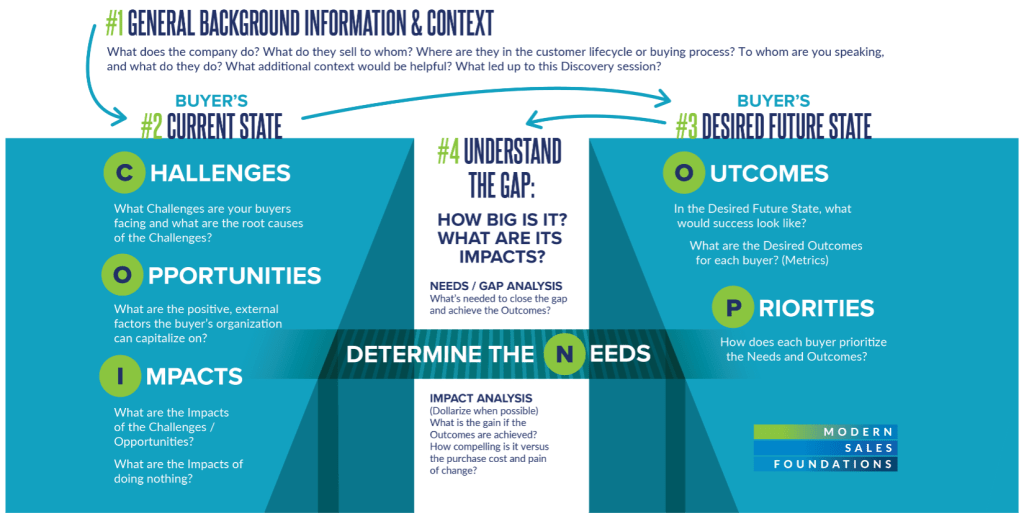
Instead of jumping into a demo, Jordan asks thoughtful questions about Dana’s internal decision process. Who else needs to be involved? What concerns might the CFO have? What’s the risk if this project fails? What does success look like? What outcomes are you hoping for?
Jordan shares a simple decision map that outlines how other clients have successfully navigated similar purchases. She offers a customizable ROI calculator Dana can use to build her business case. And she even role plays a few tough questions Dana expects to get from her VP.
By the end of the week, Dana isn’t just leaning toward Jordan’s solution. She’s championing it internally. Not because of a clever pitch, but because Jordan made her feel confident, prepared, and supported.
That’s buying enablement. And that’s what authentic sellers do.
Unlearning the Old Playbook
Here’s the hard part for many: unlearning.
Many reps have been trained and rewarded for using outdated techniques. Shifting to authentic communication isn’t just about learning new skills. It’s about letting go of old habits.
Sales enablement leaders can help by:
- Creating safe spaces for reps to practice new behaviors (deliberate practice rocks)
- Reinforcing mindset shifts through sales counseling and feedback
- Celebrating progress, not just outcomes
- Replacing outdated playbooks with frameworks that support buyer-centric conversations
This isn’t a one-and-done training event. It’s a cultural transformation. And it starts with enablement.
What Sales Enablement Leaders Can Do
If you’re in sales/revenue enablement or sales/revenue operations, you have a huge role to play in this shift. Here’s how you can help your teams move from technique to authenticity:
- Rethink your training content: Move beyond scripts and objection handling (and replace the phrase with “resolving concerns”). Focus on skills like discovery, storytelling, and problem-solving.
- Coach to behaviors, not just outcomes: Use tools like the Two Simple Models That Will Improve Your Win Rates! to reinforce the right behaviors in the field.
- Model authenticity yourself: Whether you’re enabling reps or leading teams, your example sets the tone.
- Align with the buyer journey: Use buyer-centric frameworks to ensure your sales process supports how buyers actually buy.
- Invest in mindset and skill development: Techniques are easy to teach. Mindsets and skills take time, but they’re worth it.
The Business Case for Authenticity
Let’s be clear. This isn’t just about being nice. It’s about being effective.
Authentic sellers:
- Build stronger relationships
- Shorten sales cycles
- Increase win rates
- Drive higher customer lifetime value
In Grow Faster with These 10 Advanced Skills for Your Sales Force, I outlined how skills like emotional intelligence, business acumen, and strategic thinking drive performance. These aren’t “soft skills.” They’re power skills, and they’re what separate the best from the rest.
And the data backs it up. LinkedIn’s research shows that top-performing sellers are 46% more likely to lead with insights and 52% more likely to focus on long-term customer value. These sellers don’t rely on gimmicks. They build trust, guide decisions, and create meaningful impact.
Authenticity isn’t just ethical. It’s effective. It’s scalable. And it’s sustainable.
Closing Thoughts: A Better Way Forward
So, here’s the bottom line.
Stop using sales techniques. Start communicating authentically.
The world has changed. Buyers have changed. And it’s time our sales practices caught up. This isn’t about being soft. It’s about being smart. It’s about helping buyers make confident decisions in their best interest — and doing it in a way that builds trust, reduces friction, and drives results.
If this message resonates with you, and if you’re ready to build a sales force that’s buyer-centric, authentically human, and wildly effective, I invite you to explore:
- The Modern Sales Foundations (MSF) Website
- The MSF Digital Solution Room
And if you’d like to talk about how to bring this to life in your organization, contact us here.
This post was originally published as a LinkedIn newsletter, which you can find here.

Previous
Next