

Sales Counseling as a Performance Improvement Tool

Introduction
I want to talk about what I call “sales counseling.” This is a somewhat tricky topic that I believe is vastly misunderstood and underutilized. It also has wonderful potential for personal development and performance improvement.
As we were guided by Socrates:
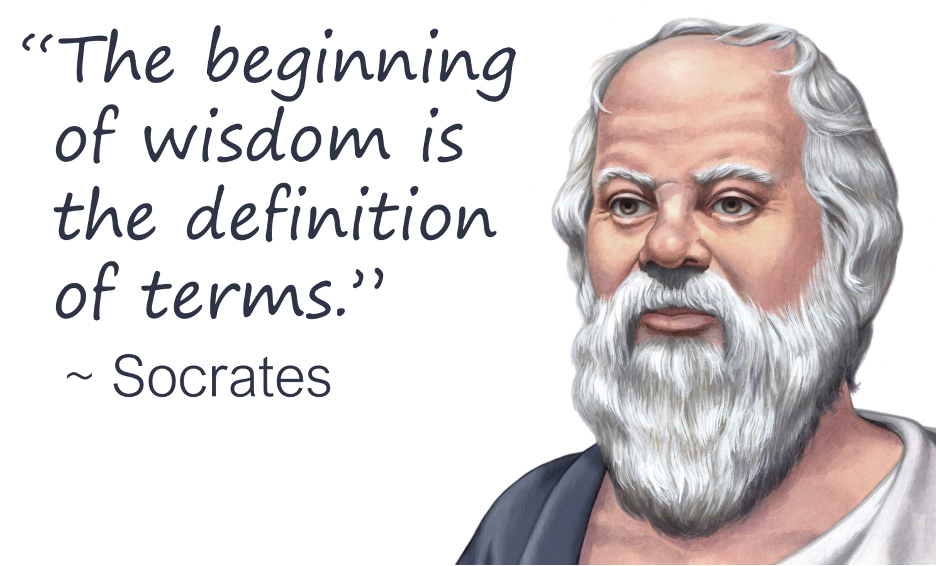
So, let’s start there and get into what “sales counseling” is all about, how I define it, and how front-line managers can use the method to help their sellers break past a sticking point when their mindsets or beliefs are holding them back.
To lay a foundation, let’s look at counseling and workplace counseling on the way to sales counseling.
What is Counseling?
Let’s see what a dictionary says:

Hmm. Assistance and guidance in resolving personal, social, or psychological problems and difficulties. That sounds a little heavy for a sales manager, doesn’t it? It is. That is why I use the term, “sales counseling.” Before we get to that, let’s look next at workplace counseling.
What is Workplace Counseling?
This is a little different. In a work setting, “workplace counseling” refers to formal discussions between a supervisor and an employee, usually focused on addressing specific performance issues, behavioral concerns, inappropriate workplace behavior, or personal problems that may be impacting their work, with the goal of providing guidance and support to improve their performance or well-being, within the company.
Workplace counseling can range from addressing minor performance concerns to more serious disciplinary matters, depending on the situation.?This type of counseling is typically handled by the employee’s manager but may include assistance or guidance from human resources or legal, as appropriate.
Behaviors that might warrant workplace counseling include: consistent tardiness, excessive absenteeism, declining work performance, unprofessional conduct like rudeness or gossip, frequent conflicts with colleagues, disruptive behavior, noticeable changes in mood or demeanor, substance abuse indicators, poor time management, failure to meet deadlines, and potential safety violations — essentially, any pattern of behavior that negatively impacts the employee’s productivity, workplace dynamics, or overall job performance.?
Personal problems – including physical illness (self or family), depression, other mental health issues, financial struggles, substance abuse, divorce/separation, and others – are well-known derailers of former top performers. While managers certainly may get involved in addressing these issues, they should involve a trained human resource professional to navigate these issues appropriately and when available, refer the employee to an Employee Assistance Program (EAP).
For those wanting to understand more about the types of counseling, there is an excellent resource available here: Employee counseling: Definition, best practices and top examples for leaders in 2024. This article doesn’t address sales counseling, specifically, but it does address many other forms and offers excellent advice.
What is “Sales Counseling?”
Sales counseling is a subset of workplace counseling, with a specific focus on addressing the underlying mindsets and beliefs that influence and impact sales behaviors and sales performance.
In Sales Coaching Excellence, I teach sales managers how to assess the root cause of a performance gap and to select the right solution to close the gap. In the program, we focus on field training and sales coaching, but we acknowledge counseling and other solutions. (Not every performance issue can be resolved with training or coaching.) To help managers select the right solution, we provide what I call The Solutions Chart:
The Solutions Chart

I adapted this chart from the work of Ferdinand F. Fournies, with his permission, and expanded it. (I also like this Performance Analysis Flowchart, but most managers find the Solutions Chart a bit easier to use and apply.)
Look at the top two conditions: 1) Don’t Know Something, and 2) Incorrect Thinking.
Let’s look deeper at Don’t Know Something:
- When a seller doesn’t know what, why, and how to do something (or, how to do it the way you want it done, because you know it will get results), then you need to train them. This is directive, where you tell them how to do it, ask them to summarize it to your satisfaction, show them how to do it (role play) and have them role play it back to you, to your satisfaction. By doing this, you are helping them understand and then build the skill to do something in the most effective way. (The full model for field training is Tell, Show, Do, Review, as taught in my course, Sales Coaching Excellence.)
- When a seller knows what, why, and how to do it (the way you want it done), but just needs to do it better, to get better results, you can coach. This is facilitation. You draw things out of them as much as possible (because it’s in there). In this case, you engage them in a discussion about what they can improve and have them summarize it. Then you have them practice it, to further develop their skills. You should provide feedback and have them redo it, in a loop (deliberate practice), incorporating the feedback each time, to help them get better at it. (The full model for sales coaching is Engage, Practice, Do, Review, which is also taught in my course, Sales Coaching Excellence.)

Understanding how to use these models, for sales managers, is foundational to sales coaching excellence and ongoing performance improvement.
Now look at Incorrect Thinking:
This includes when they think…
- Their way is better
- Your way won’t work
- Something else is more important
- They are doing it (but they’re not)
Training and coaching will likely not resolve these issues, because they don’t address the root cause reasons. You can train them over and over, but if they don’t believe it will work, or won’t work as well as what they already do, the likelihood they’ll change their behavior is very low.
That said, there’s a good chance that providing clear, effective feedback and applying coaching may be enough to resolve the bottom two (something else is more important and they think they are doing it). But if not, and for the first two (their way is better and your way won’t work), it’s likely that the employee needs sales counseling (which is like coaching but applied to mindset and beliefs instead of skills and behaviors).
That’s worth repeating:
Sales counseling is like coaching, but rather than being skills focused, it is applied to the employee’s mindset and underlying beliefs that are driving their behavior.
APPLYING SALES COUNSELING FOR: Their Way Is Better
If they think their way is better, you’ll have to help them understand:
- Your viewpoint
- What you’ve seen work best
- And probably most importantly – why you want them to do it your way (I assume it’s related to outcomes or results that can be improved) and as applicable, why you prefer your method to what they are doing. Be kind, but clear, and use examples.
You should point to examples of improvements you’ve seen using your approach and gain agreement for trying it your way.
APPLYING SALES COUNSELING FOR: Your Way Won’t Work
If they think your way won’t work, this is skepticism or disbelief. This is like resolving customer concerns and the same models can be applied.
So, you can:
- Acknowledge their feelings and perspectives
- Ask some questions to clarify and truly understand their point of view
- Then provide some relevant proof that not only does your way work but works exceptionally well
- Check to see if this helped resolve their concern
- Gain agreement to try your method
- Follow up to ensure they did and see how it worked
- Continue with coaching over time, if needed, to help them master the new skill and get the best possible results
Relevant proof might include top performers who use your method, your personal expertise, research findings, or company training materials (the power of the printed word is sometimes surprisingly influencing).
- Read more about the model for resolving concerns here: Two Simple Models That Will Improve Your Win Rates!
At the end, though, remember to confirm and gain agreement for them to try it your way and follow-up to ensure they did and see how it worked. (The full model for resolving concerns, as described in the above article, is taught in my Modern Sales Foundations course. The context there is selling, but the same model works well for addressing concerns in any context.)
Applying Storytelling to Further Influence & Persuade
I recently published an article on Distribution Strategy Group‘s blog about The Influential Power of Storytelling in Sales. When working with a seller who believes your way won’t work or their way is better, trotting out your storytelling abilities and Ethos (credibility), Pathos (emotion), and Logos (logic) can be helpful. It’s always best when you can influence, create an Aha Moment, and get your seller to try a new method based on your recommendations and experience and their desire to improve.
Don’t you wish it always worked that way? When it doesn’t, this next section may be your next step in sales counseling.
When You Need to Manage Consequences

In the best of worlds, having the above conversations, engaging the employee, explaining why, offering relevant proof, and addressing their concerns will work fine. Sometimes, it works well and is all that’s needed. Behavior changes, results improve, and the seller’s mindsets and beliefs are rewired to the new behavior, supported by success.
In other cases, however, you may need to move down the Solutions Chart to manage consequences.

When this is necessary, I can offer two pieces of advice, based on the above chart with The Four Behavioral Consequences.
- Apply the Four Behavioral Consequences Appropriately
- Remember that Emotions Follow Actions (not the Other Way Around)
Apply the Four Behavioral Consequences Appropriately
You can shape behaviors by using the right consequences.
- If it is something you want to start, continue, or increase, use Positive Reinforcement (get something good) or Negative Reinforcement (avoid something bad).
- If you need to reduce or eliminate an unwanted behavior, you can use Punishment (get something bad) or Penalty (lose something good).
Note: The term Negative Reinforcement is counterintuitive and often confused with Punishment. Despite the word “negative” it delivers a positive outcome. But as you see in the chart:
- Negative Reinforcement avoids a bad thing and will increase the behavior.
- It’s Punishment that delivers something they don’t want to happen and decreases behavior.
The above chart is a helpful reminder until this becomes second nature.
As a general rule, the consequences that increase behavior will be viewed more positively by the employee. The consequences that decrease behavior are viewed more as a slap on the wrist or punitive. Sometimes, however, either or both are necessary, until the behavior changes to what you want, which brings us to…
Remember that Emotions Follow Actions (not the Other Way Around)
This is very counterintuitive to some. By changing behaviors (often through consequences), the success brought about by the new behaviors influences the emotions behind them (hence shaping the mindsets and beliefs).
Obviously, you hope that the counseling from the previous section will entice or influence the employee to do things the way you want, without managing consequences. Then, the underlying mindsets and beliefs will likely change ever quicker, continuing to reinforce the new behavior.
But sometimes the consequences are needed. Offering praise at every step when changes are made will help and showing a tie to improved performance and offering whatever type of incentives or rewards and recognition that the employee finds motivational will further support the changes you want to see. Over time, this should influence the emotions, mindsets, and beliefs, as well.
There are some other things that work, but they are usually best applied to yourself, when you are trying to change a behavior, or to someone who truly want to change. These things include affirmations, self-hypnosis, and expert-guided hypnosis can also work, but many find these methods odd or scoff at them.
Closing Thoughts
Sales counseling is an essential but often overlooked tool in a sales manager’s toolkit. While sales training and coaching focus on knowledge and skill development, sales counseling addresses the mindsets and beliefs that shape behavior. When a seller’s thinking is holding them back, no amount of training or coaching will drive meaningful change – because beliefs dictate actions.
By incorporating sales counseling into your leadership approach, you can help sellers reframe their perspectives, align their thinking with proven success principles, and ultimately improve their performance. This process requires thoughtful conversations, influence, and sometimes managing consequences to reinforce the right behaviors.
At its core, sales counseling is about guiding sellers to see new possibilities for themselves and their success. When done effectively, it not only resolves immediate roadblocks but also fosters long-term growth, engagement, and accountability. And that’s what great sales leadership is all about.
You can read Mike’s original post here.
For more insights, download our Expert Guide, Don’t Just Manage, Coach Your Sales Team: https://modernsalesfoundations.com/sales-coaching-expert-guide/

Previous
Next