

How Untrained Sales Managers Damage Company Culture and Degrade Performance

Introduction
Every sales enablement leader has seen this movie — or at least heard the horror stories. A top-performing rep gets promoted to sales manager. It’s meant to be a reward. A recognition of success. But soon after the promotion, things go sideways. The team gets tense. Forecasts get shaky. Turnover ticks up. The high performer, now the new manager, is overwhelmed and doubting themselves. Imposter syndrome in these cases is more than a lack of self-esteem or confidence — there’s some truth to it. And no one seems to know what went wrong.
This isn’t rare. It’s a leadership epidemic. And it’s worse in the sales profession than in most others.
Companies regularly promote sellers into management roles without any preparation. According to research from Gartner, less than 50% of sales managers receive effective leadership training before or after they take the role. And yet, these are the very people responsible for driving team performance, reinforcing training, maintaining culture, and influencing whether reps stay or go.
We spend so much time developing reps but often leave their managers to sink or swim. This article explores the hidden and not-so-hidden damage caused by skipping sales manager training—especially for newly promoted leaders. It also lays out the business case, the cultural implications, and a path forward.
From Star Rep to Struggling Manager: Why the Role Change Fails Without Support
There’s a dangerous myth in sales organizations: if someone is a great rep, they’ll be a great manager. It’s not true. And believing it sets both the person and the team up for failure.
The skills that make someone an outstanding seller — autonomy, execution, competitiveness –don’t always translate to management. Managers need to lead through others. They need to coach, support, set expectations, and stay emotionally tuned in to their people.
- SIDEBAR: There are some decent overlaps/parallels between roles. This allows reps to build on their strengths, but the missing gaps must also be closed.

What often happens is this: A high-performing rep gets tapped for a leadership role. No onboarding. No training. Maybe a quick conversation with their boss. They get handed a forecast template, a few KPIs, and are told to “keep doing what you’re doing, but now help others do it too.”

They start out excited. But soon, they’re in back-to-back meetings, managing performance issues, stuck in CRM reports (or worse, spreadsheets), and trying to navigate conversations they’ve never had before. The pressure to “just know how to lead” eats at them.
Meanwhile, the reps on their team are watching closely.
How Sellers Respond to Untrained Managers
Sellers are quick studies. They notice when managers avoid hard conversations. They recognize when feedback is vague, inconsistent, or reactive. And they adjust their behavior accordingly.
Here’s what that looks like on the ground:
- Reps stop bringing pipeline risks forward.
- They sandbag forecasts to avoid scrutiny.
- Coaching conversations become superficial or quick feedback or are skipped entirely.
- Frustration builds, but few speak up.
- High performers look for a transfer or exit.
- Mid performers check out quietly and do the bare minimum.
It’s not always dramatic. Sometimes, the damage happens slowly, like a slow leak in a tire. But eventually, performance drops, morale declines, and the culture begins to shift.
And it all starts with how the team is led.
Cultural Damage: Toxicity Grows in Uncertainty
When sales managers haven’t been trained to lead effectively, they often fall into default modes: micromanagement, avoidance, blame-shifting, or over-indexing on numbers while ignoring people.
This creates instability. And instability creates fear or discomfort.
In psychologically safe cultures, reps feel secure sharing concerns, admitting mistakes, asking for help, or raising ideas, free from concerns about ridicule or embarrassment. In unsafe cultures, silence rules. People protect themselves. Trust disappears.
Harvard’s Amy Edmondson has shown that psychological safety is the foundation of high-performing teams. Her research proves that teams with high psychological safety are more innovative, adaptable, and productive. McKinsey’s research backs this up, linking safety to retention, engagement, and business outcomes. And so does Google’s Project Oxygen research, where they explored internally what fueled their high-performing teams.
In sales, safety translates to the ability to try new messaging, push for new opportunities, or challenge status quo thinking — all without fear of embarrassment or punishment. Untrained managers don’t just miss the opportunity to foster this. They often unintentionally destroy it.
Accountability Without Support Creates Burnout
Let’s be clear — psychological safety doesn’t mean low expectations or fuzzy accountability. In fact, safety and accountability work best when combined.
But here’s what happens when you get it wrong: Untrained managers often focus on accountability without building support. They press for numbers without coaching on how to get there. They react to misses with pressure rather than partnership.
This leads to defensive behaviors. Reps become less likely to take initiative or admit when they’re stuck. Forecasts get padded. Team meetings get tense. Coaching sessions, if they happen at all, feel like performance reviews.
In my newsletter on the Avoiding Common Pitfalls for First-Time or Early-Career Sales Managers, I unpack this in detail. Pitfall #3 is trying to hold people accountable without creating clarity, support, or safety. It’s not sustainable. And it never drives long-term performance.
The Hidden Costs: Morale, Turnover, and Underperformance
The damage goes beyond culture. Poor management has a measurable business cost.
Let’s look at the numbers.
- A study from Allego and RAIN Group reports that turnover is dramatically reduced when reps feel supported by their manager.
- CSO Insights found that companies with strong sales manager training had 11.9% voluntary turnover. Companies with weak or inconsistent training? 19.5%.
- The average cost (from multiple sources) to replace a B2B rep is estimated to be 1.5 to 2x their annual salary, not including lost productivity and disruption to the pipeline.
- Gallup research shows that managers account for at least 70% of the variance in employee engagement.
So, if you’re wondering why performance is down, rep churn is up, or your training isn’t sticking — start by looking at your managers. Frontline sales managers can be positive force multipliers and performance levers, or the opposite.
“Employees don’t quit jobs; they leave bad bosses.“
Christopher Rainey
This quote has multiple variations by multiple people, but the intent is the same. Bad managers are pushing employees away. Are managers trained to lead? Or just trying to figure it out on the fly?
The Growth Mindset Gap
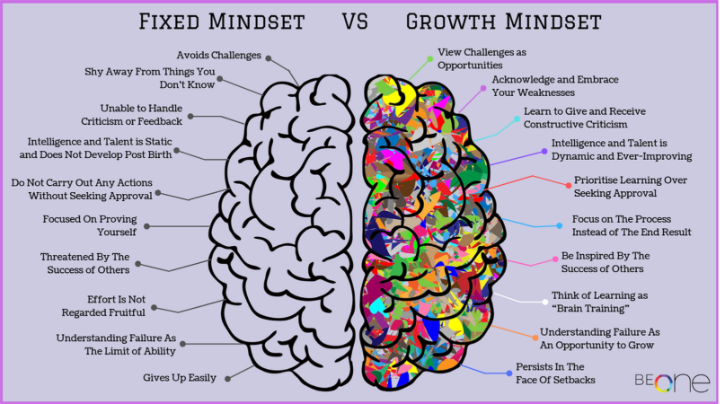
Another danger of untrained managers is how they frame learning and development. Without guidance, many adopt a fixed mindset.
They reward natural talent, not effort. They avoid feedback or simply fire off feedback at reps rather than really coaching. And they only to do that fix things, not help their employees grow and develop. They punish mistakes. All of this reinforces fear and hesitation on the team.
In contrast, managers with a growth mindset encourage learning. They normalize trial and error. They consider mistakes as learning experiences. They frame coaching as development, not discipline. That shift changes how reps think about their own progress.
“You win some, you learn some.”
Jason Mraz in “I’m Yours”
Stanford’s Carol Dweck has made this concept mainstream, but it’s especially important in sales, where rejection, experimentation, and adaptation are daily realities.
A growth mindset culture starts with how managers show up. And that’s something they need to be taught.
Sales Is Performance, So Practice Matters
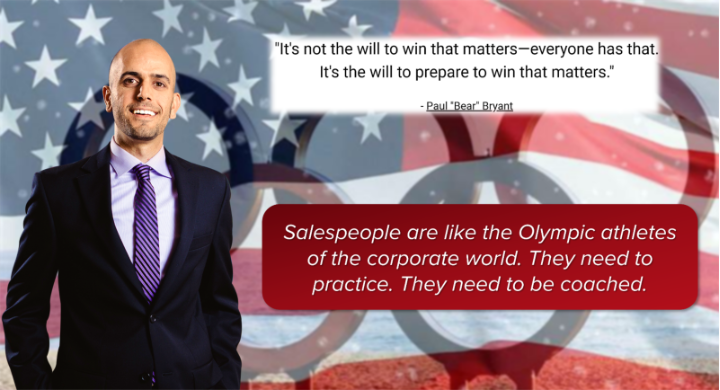
Sales is a performance profession. Like athletes, reps need to practice their craft. And like great coaches, sales managers need to create those practice environments.
That doesn’t happen on its own.
Without training, most managers avoid role playing, skip observation, and give vague feedback. They don’t know how to structure practice, what to look for, or how to coach the “how” of selling. And they especially don’t facilitate or debrief well.
Training managers to lead effective practice sessions — role plays, scenario reviews, peer feedback — builds confidence and skill. It also reinforces that learning is an expected and ongoing part of the job.
This is where programs like my Sales Coaching Excellence can help. They teach managers to coach skills and behaviors, not just results. It’s counter-intuitive to some, but by focusing on skills and behaviors, results improve. By just focusing on results, you will not likely move the needle or at least won’t get into a long-term cadence of continuous improvement.
When Data Becomes a Weapon
Another common issue with untrained managers is their relationship with metrics. They know they need to look at dashboards and KPIs — but they don’t know what to do with the information.
Often, they fall into the trap of using data as a weapon rather than a coaching tool.
Instead of asking, “What’s getting in the way of your conversion rate?” they say, “Why are your numbers down again?” Instead of exploring trends, they assign blame. The result? Reps get defensive. Real issues stay hidden. And data becomes something to dodge, not learn from.
Training managers to use data in conversations, to spot patterns, ask better questions, and co-create solutions, turns reporting into a leadership tool.
A Quick Story: When Good Intentions Aren’t Enough
Let me paint a picture you might recognize.
“Jen” was a high-performing rep, always top 10% in the region. Driven. Organized. Respected by her peers. She got promoted to manager and was expected to hit the ground running.
She tried to lead the way she sold… she set high standards, led by example, pushed hard. But she had no training. No guidance. No coaching. And she didn’t get a lot of that from her manager when she was a rep, so she didn’t have something to model. I consider this a form of “corporate hazing,” and it happens a lot. Newly promoted managers tend to manage their team the way they were managed. And what do we tend to do with top performers? Well, we leave them alone and let them sell, right? Then, when they are promoted, they have nothing to model. It’s a vicious circle that continues.
Within three months, two reps left. One transferred, one quit. Pipeline reviews were stressful. “Coaching” was mostly quick feedback focused on corrections. Jen was working 60- to 70-hour weeks and questioning if she made the right choice.
It wasn’t her fault. It wasn’t a character flaw. It was a systems failure. Jen didn’t fail the team. The company failed her by promoting her without preparation.
Unfortunately, this story plays out every day in sales organizations around the world.
The Business Case for Manager Development
If you’re a sales enablement leader, a CSO, a CRO, or a CEO, here’s what you need to know:
- Companies with excellent sales training programs (including manager training) experience 49–62% higher win rates.
- Manager coaching boosts quota attainment by 5% or more.
- Manager quality drives employee engagement, productivity, and retention.
- Psychological safety and empathy from leadership are directly linked to business outcomes, especially among diverse teams.
- Training ROI shows up in revenue, but also in retention, ramp time, compliance, and morale.
Skipping manager training may save a few dollars today, but it costs you far more in missed opportunity, cultural impact, lost talent, and poor performance over time.
What Great Manager Training Looks Like
So, what should you actually include in a training program for new sales managers?
- The role and responsibilities of a frontline sales manager
- Common pitfalls and mistakes to avoid
- Foundations of psychological safety and trust
- Growth mindset modeling.
- Coaching fluency, including diagnosis, solution design, and models for leading meetings, training, coaching, counseling, and providing feedback — and getting into a regular cadence of coaching and continuous improvement.
- Hands-on practice in coaching conversations.
- Role play and simulation-based learning.
- Reinforcement loops, pre-work, post-work, and peer learning.
- Alignment with sales rep training to create a unified system.
- How to build and lead a high-performing team.
- How to run a sales management operating system.
“If I only had a dollar to spend on training or enablement, I’d spend 75 cents on the frontline sales managers.”
Mike Kunkle
A System That Works
Sales Management Foundations equips newly promoted managers to:
- Hire effectively.
- Set clear expectations.
- Train and coach with confidence.
- Lead with empathy and clarity.
- Create a culture of growth and accountability.
- Use data to drive insight, not fear.
- Practice the behaviors that drive performance.
- Reinforce what your sellers are already learning.
- Establish a management cadence and rhythm with a Sales Management Operating System (smOS).
It’s the prep they should have had before stepping into the role — and the support they need to grow into exceptional leaders.
If you’re building or rebuilding your leadership development ecosystem, pair it with Sales Coaching Excellence. It goes deeper on coaching frameworks, process, models, and tools.
Together, they create a curriculum that builds strong teams from the top down and the inside out.
Closing Thoughts: Ready to Change the Story?
Ask yourself:
- Are we preparing our managers to lead and manage, or just hoping they figure it out?
- What would our reps say about the support they receive from their manager?
- Do we reinforce learning and culture, or just track KPIs?
If your answers raise concerns, it’s time to make a change.
Start by auditing your current approach, and if you have them, your programs. Then give your managers the training, structure, tools, and support they really need. And don’t forget to coach the coaches.
If you’re ready, check out Sales Management Foundations (write to hello@sparxiq.com – this program is in beta currently) and Sales Coaching Excellence (see the website here or a digital solution room here). They’re built from real-world experience, research on what top-performing sales managers do differently, and what actually works in the field.
Your culture, your results, and your people will thank you. And so will your customers, shareholders, or stakeholders. A smaller container for blog content.
This post was originally published as a LinkedIn newsletter, which you can find here.

Previous
Next