

Get Grounded with SOIL to Deliver Better Feedback

Introduction
Sales managers provide feedback all the time. Sometimes it is rapid fire; other times it is an extended session. So, what’s the issue then? Why do we need some special model for this?
The issue is that a lot of the feedback is forgotten or never applied. And managers often think they’re coaching when they give feedback. They’re not, really. Feedback is a part of coaching, like training and counseling, but by itself it’s just… well, feedback.
What is Feedback, Exactly?
Good question. Here’s what the merriam-webster.com online dictionary has to say:
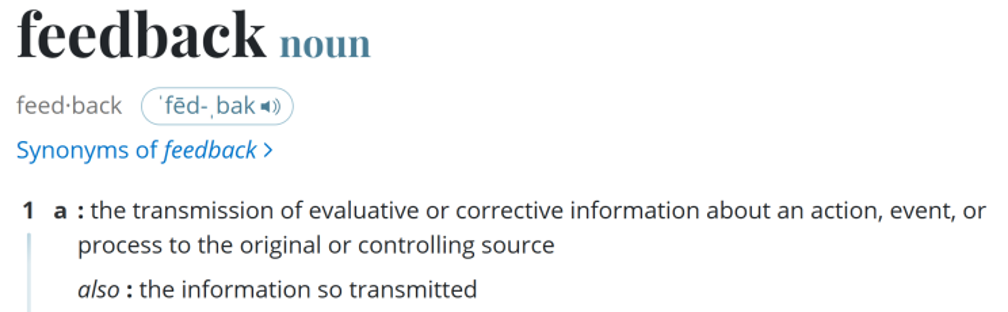
In Sales Coaching Excellence, which primarily focuses on field training and sales coaching, I do define the difference between field training, sales coaching, counseling, and feedback so it’s clear, because they are not the same thing, and each has a place when coaching for improved work performance.
Feedback is your advice. It’s your opinion or perspective. It’s what you recommend that someone else should do, or how you think they should do it.
It is:
- Often corrective or evaluative.
- Focused on previous or current behavior.
- Usually directive instead of facilitative (telling vs. asking).
Feedback can help employees understand what prevents them from reaching their current goals or what specifically to do differently. And, providing feedback can be part of the coaching process (or training), but it does not replace them (and is not all that’s needed).
Feedback is probably the most overused method for “coaching.” Sales managers often fire off quick feedback in a heated rush, thinking that they are coaching. They’re not. The purpose of this article is not to cover all of these methods in detail, but let’s at least differentiate them at a high level:
Field Training
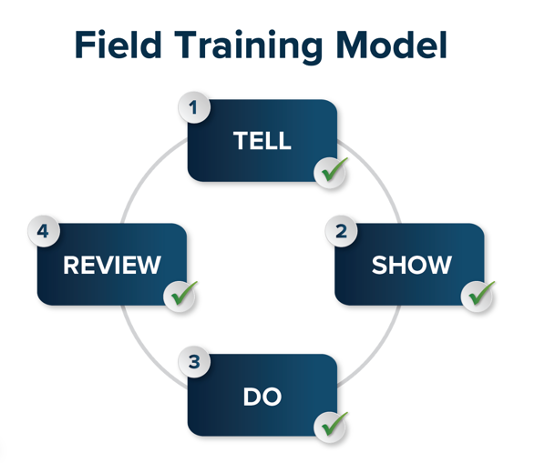
Training is done when someone doesn’t know what, why, or how to do something, or perhaps they don’t know how to do it the way you want it done, because you know that will get the best results.
Training is directive – you tell and show the employee what to do and have them summarize and role play the skill back to you. The model I teach is Tell, Show, Do, and Review, with Understanding Checks at each step.
Sales Coaching
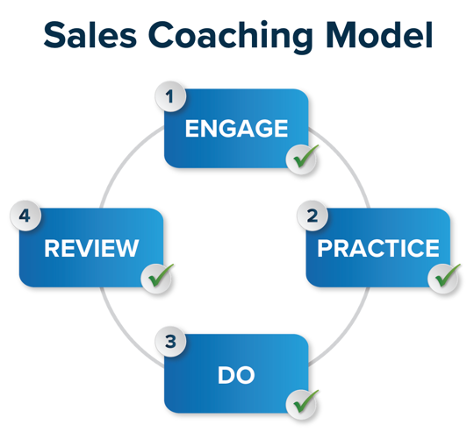
Sales coaching is appropriate when the employee knows what, why, and how to do something, but needs to do it better or more effectively to get a better result. They just need to hone or master the skill. Coaching is more facilitative.
If training is like pouring water into an empty glass, coaching is like siphoning the water back out and filtering it to make it purer. You engage the employee when coaching and give them an opportunity to practice to further hone the skill you’ve focused on. The model I teach is Engage, Practice, Do, and Review, with Understanding Checks at each step.
Sales Counseling
Counseling is very similar to coaching and follows the same model, but rather than being focused on skills, at least at first, it is applied to mindset and the underlying beliefs that support or limit success (and prevent the employee from uses the skills you want them to use).
In Engage, you will spend more time on the “Why” and pull out the employee’s perspectives to understand what’s holding them back (often, they thinking their way is better or your way won’t work).
Addressing this may involve a fair amount of ethical influence and persuasion on your part and perhaps having the employee speak with others who do things the way you request and are getting far better results. You will need to gain agreement before the Practice step, or the practice will be half-hearted or disingenuous and the employee would not be likely to apply your advice in the real world.
So, unlike coaching, counseling may span multiple meetings in the Engage step before moving forward or getting through the remaining steps. In some cases, it may also require adjustments to manage consequences, to ultimately change behavior.


How Does Feedback Fit?
Interestingly, feedback can be used effectively in all of the above approaches.
- Field Training: In the Show step, you demonstrate the skill and ask your employee to role play it with you. When they do, and you debrief (which is a science and art in itself), you will have an opportunity to ask if you can provide your feedback at the end and then provide it. This helps shape the employee’s effectiveness with the skill they are learning.
- Sales Coaching: In the Practice step, you ask the employee to role play to further hone the skill you’re targeting. As above, during the debrief, you will have an opportunity to ask if you can provide your feedback at the end and then provide it. This helps to continue to improve the employee’s effectiveness with the skill they are learning, and nudges them onward to mastery, over time.
- Sales Counseling: When you engage your employee and discuss expectations and the reasons why they hesitate to do what you want them to do (or the way you want it done), you will once again have an opportunity to ask if you can provide your feedback and then provide it. Perhaps using Ethos, Pathos, and Logos to influence their thinking, or by providing examples of how others have benefitted from what you’re recommending – but in either case, you provide your rationale and explain “the why” to address the underlying mindsets and beliefs to change their behavior.
- Direct Feedback: And lastly, there may be times when you happen to observe something (such as with opportunistic coaching) and as part of the in-the-moment coaching, ask permission and provide your feedback.
Models for Delivering Feedback
I’m not the first person to develop a model for delivering feedback. They’ve been around a long time and are often a part of leadership training and development. If you’d like to explore and see other models, I found this excellent article a few years ago and saved it:
That said, I do have a model that I’ve used since 2003 or so.
My SOIL Model for Feedback
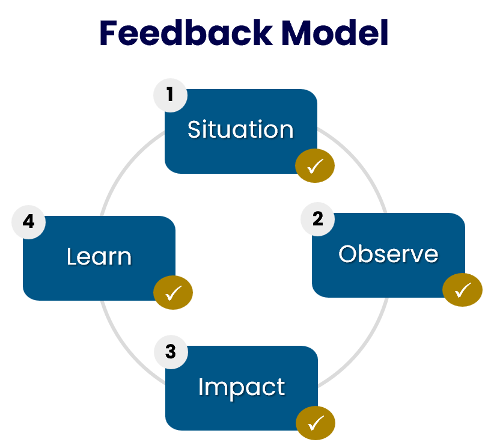
My model is SOIL. (I know, I know – so much joke potential). SOIL stands for Situation, Observe, Impact, and Learn. I also include Understanding Checks, as I do for my other models in Sales Coaching Excellence. There are some important concepts that are deeper than just the words in the acronym, so let’s break it down.
Let’s start with two general guidelines.
- Seek Permission First: Undocumented in the model acronym but still important, is to always ask permission to provide your feedback.
- Be Specific: In the words of my fourth-grade teacher, Mrs. Dietz, “To be terrific, be specific.” Vague feedback or feedback that is couched so much to avoid saying anything negative, is not helpful. Be kind, be compassionate, be empathetic – but be honest, clear, and specific, too.
With those foundations, here is the model.
S – Situation (The Context)
This is the situation or circumstance in which you observed your seller. It could include the location, other people involved, the setting, seating arrangements, or whatever is relevant.
- Understanding Check – Confirm that you’re aligned on how you described the situation.
O – Observe (Observed Behavior)
This is what you observed your seller doing. It can include anything about their behavior – words used, tone of voice, rate of speech, pitch variations, facial expressions, and body language. Basically, all verbal and non-verbal communication.
- Understanding Check – Confirm that you’re aligned on what you observed and how you’ve described it.
I – Impact (of That Behavior)
This is the result of the behavior you observed. It includes the reactions of others, the responses received, and the overall impact and outcome, especially compared to the desired outcome.
- Understanding Check – Confirm that you’re aligned on the impact and outcomes.
L – Learn (Feedback and Advice)
This is what you recommend the seller do differently or consider, based on the situation, the behavior you observed, and the impact of the behavior.
- Understanding Check/Action Plan – Confirm the seller’s understanding and your alignment. Engage and discuss further as needed. If the employee is not accepting the feedback, you may need to move to Sales Counseling, if it’s important feedback. As needed (based on the extent or importance of the feedback), have them document an Action Plan and implement it.
Following this simple model, and remembering the foundational guidelines, will radically improve not only your effectiveness in providing feedback, but the likelihood that it will be heard, understood, and adopted.
Closing Thoughts
Feedback is a crucial component of the sales enablement process, but it’s important to remember that it is just one piece of the puzzle. Effective feedback can guide and shape behavior, but it must be delivered thoughtfully and in the right context to truly make an impact. By understanding the distinctions between feedback, training, coaching, and counseling, sales managers can better support their teams and drive performance improvements.
Using models like SOIL can help structure feedback in a way that is clear, actionable, and aligned with the employee’s development needs. Remember to always ask for permission before providing feedback, and ensure that your observations and recommendations are specific and constructive.
As you continue to refine your approach to feedback, keep in mind that the ultimate goal is to foster a culture of continuous improvement and growth. By doing so, you’ll not only enhance individual performance but also contribute to the overall success of your sales team.
Oh, and one final thought: I made it through the entire article without once making a reference to getting your hands dirty, using the best SOIL to grow your team, or saying that it’s dirt simple. You’re welcome.
Ready to transform your feedback process?
Download our free Infographic | Should You Train, Coach, or Provide Feedback? to learn how to make your feedback more impactful and drive real change in your team’s performance.
You can read Mike’s original post here.

Previous
Next