

Can Virtual Sales Training Really Move the Needle Better Than Classroom Training?

Can virtual sales training actually improve results? Can it move the needle on the metrics that matter most? And can it do it better than classroom training?
It’s a debate that stirs strong emotions and sparks passionate discussions. Or worse, because of long-standing beliefs or personal preferences, the discussion is shut down. There is still a lot of strong cognitive bias in the sales profession in favor of classroom-based, instructor-led training. While this event-based training continues to dominate as the preferred method for many sales leaders, the reality is far more nuanced.
Introduction
With the technology available, coupled with sound instructional design, and engagement of frontline sales managers at the local level (a hybrid approach that sometimes is in-person and sometimes live virtual meetings), well-designed virtual training can actually be more effective than classroom training.
This hybrid approach can achieve results that traditional, old-school methods rarely deliver.
Those of us in the professional are all too familiar with how often training fails to deliver an impact. The data, the research, and my experience all point in one direction: when done right, hybrid virtual training can move the needle.
So, buckle up, Enablers, and let’s dive into this topic.
Cognitive Bias: The Comfort of Familiarity
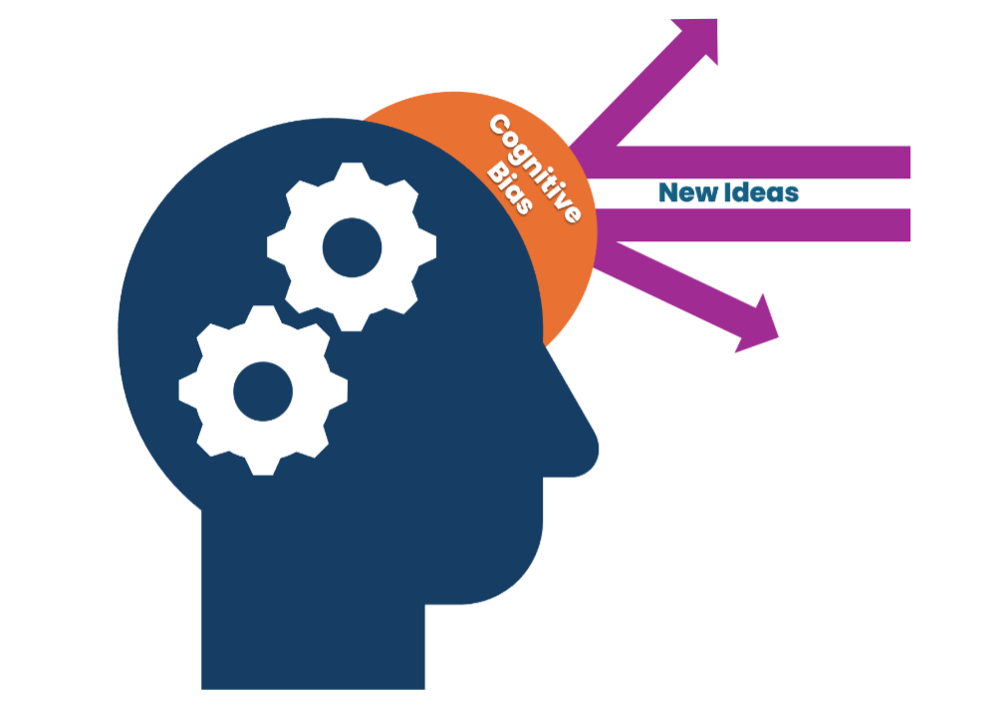
Why do sales leaders cling so tightly to traditional, event-based classroom training? It boils down to cognitive biases, which cloud judgment and influence decision-making. Biases such as:
- Status Quo Bias: The belief that what has always been done must be right.
- Anchoring Effect: The tendency to rely too heavily on existing methods, even in the face of evidence suggesting alternatives might be better.
- Confirmation Bias: The search for anecdotal evidence that validates personal beliefs about training effectiveness.
On the surface, classroom ILT feels tangible, interactive, and impactful. For those in the sales profession who focus on relationship building and forging feel-good human connections, you can see how in-person, face-to-face training is favored. Yet, when you scratch beneath the surface, its limitations are glaring:
- Overwhelming Content Volume: Traditional sessions dump too much information at one time, which overwhelms working memory and stifles long-term retention.
- Attention Deficit: For better or worse, sales professionals are often multitaskers to begin with and studies have shown that those with ADHD tend to migrate into the very active sales profession. So, extended classroom sessions may create even more focus fatigue for salespeople than they might normally – but everyone with a brain experiences it (aka, cognitive fatigue). For more on cognitive load and mental fatigue, see: Cognitive Load and Mental Fatigue by L Weber Garrison, PhD
- The Forgetting Curve: Ebbinghaus’ research showed how quickly information fades without reinforcement. The loss starts immediately and declines after that over time. (FYI, academic researchers replicated Ebbinghaus’ original 1880 research in 2015 – there was no change.)
- Lack of Manager Engagement: Frontline managers play a critical role in reinforcing training, yet many ILT programs fail to engage them deeply enough or don’t ensure they know the content better than their sellers.
- Missing the Long-Term Plan: Behavior change doesn’t happen overnight, yet event-based classroom ILT often lacks a structured roadmap for sustained development, adoption, and mastery, which occur over time.
I’m just scratching the surface here, but to avoid republishing an entire other post, you can read more here about the reasons that sales training fails here: 11 Reasons Why Sales Training Fails and How to Get an ROI. It is a significant problem in our profession that too often is ignored or unaddressed.
The failure of traditional classroom training to deliver tangible results is widespread. Yet it continues.
These pitfalls hinder progress and prevent training from producing tangible, lasting improvements.
The Hybrid Model: A Modern Solution

Hybrid training, such as we orchestrate during a Modern Sales Foundations implementation, is more than eLearning or virtual learning – it’s a flexible, dynamic solution that integrates the best of technology (asynchronous) and live interactions (synchronous). Here’s how our approach succeeds where traditional ILT often fails:
1. A Bite-Sized Approach (Chunk, Sequence, Layer)
Instead of cramming information into single, overwhelming session or successive days of cognitive overload, training is broken into modules. In our case, it’s 26 modules, each featuring two 15-minute videos. These modules are paired with downloadable content summaries for easy review and fillable PDF worksheets, to help sellers review easily and prepare to use what they learned in the real world. This helps sellers focus on one key concept at a time, understand how to apply it (knowledge), and prepare to apply it (skill).
2. Manager-Led Engagement
The program hinges on the involvement of frontline sales managers, who receive step-by-step guides to lead reinforcement meetings and coach their teams effectively. Managers are not just passive participants – they’re active, prepared facilitators. The program (and those 26 modules) is split into four sections. Managers watch the videos in the first section and review their meeting guide for that section. Then, they meet with us, where we review the content and ensure their questions are answered, and review each meeting in the section, to ensure comfort leading the meetings.
This process ensures managers are prepared. They understand the content and how to facilitate the meetings (which are spelled out, step-by-step, in the guide). The guide not only prompts them to ask questions but provides the answers for them, as well. This and the rest of the structured meeting ensures the sellers experience the necessary reinforcement, retrieval learning (Q&A), Worksheet reviews, exercises and activities, and when it’s a skills-based module, role play sessions to cement their learning.
3. Weekly Cadence

After managers are prepared for a section, sellers start their training, taking one module per week until the section is complete. For sellers then, the training follows a steady, weekly schedule: two short 15-minute videos, worksheet completion (~15 minutes), and a one-hour manager-led meeting at the end of each week/module. Sellers stay engaged without being overwhelmed, and the spaced learning design aligns with memory retention principles.
When a section is complete (there are four, remember), the cycle repeats. The sellers take a 2-week break while the managers prepare for the next section, then the sellers start again, taking one module per week.
If you consider the video run-times (~13 hours), the 15 minutes of prep for Worksheets, and the 26 one-hour manager-led meetings, our course contains ~45 hours of content. Given that a classroom day contains 6-6.5 hours of content, that would translate into 7-7.5 days of instructor-led classroom training. There are very few sales leaders or sales forces who would tolerate that. But that level of instruction, spread over time, is what delivers better learning outcomes and sales results.
4. Flexibility
Here’s where the hybrid nature shines. Sellers spread across territories often connect via virtual live meetings. However, when opportunities arise for in-person gatherings, managers leverage this chance for team-building and hands-on practice. The flexibility allows the program to adapt to varying needs while maintaining consistency. If a manager leads an inside team, they will likely do all their reinforcement meetings in-person. Many managers manage a distributed outside sales team, and the majority of their weekly meetings are virtual. Both have been working very well for our clients.
5. Long-Term Execution
Without holiday breaks or skipping quarter-end, it’s a 34-week program. In some cases, when clients skip weeks for holidays or other reasons, it’s a bit longer. This focuses on creating sustained behavior change, guiding sellers through The 5 Stages of Sales Mastery & Behavior Change – Learn, Remember, Practice, Apply, and Master. It’s not a one-and-done event; it’s a journey of transformation.
Moving the Needle on the Metrics That Matter Most

The beauty of this hybrid training isn’t just in its structure – it’s in its impact. In addition to the test group/control group study cited above, here are just some of the results that our clients have seen with this method:
- 7.4% better top-line sales
- 19.1% increase in sales per order
- From 12.1% to 25% growth in overall sales
- From 9.8% to 14.5% higher margins (percentage of increase)
- 2.5 times more new accounts opened (trained group vs. untrained group)
- 34% increase in cross-selling
These numbers are far from trivial. They represent the tangible outcomes of a well-designed, well-implemented training approach. And they are far better than what we typically hear about with traditional, event-based, classroom training.
A Concern About Needing Fast Improvement…
By the way, one of the other concerns we occasionally hear is that:
SALES LEADER: “We need results fast! If I get them into a class, they’ll get faster results than if I enroll them in a 34+ week course!”
That’s not true either, for all the reasons already mentioned, but also because improving even one critical skill (things learned in the first 3-4 modules in our course) can produce very quick results. Will they incrementally increase from there? Yes, if you stick to the plan and coach. But you definitely do not need to wait until the end of the program to see positive impact and improved results.
Why Our Hybrid Approach Works
The success of our hybrid training can be attributed to several key factors:
- Instructional Design & Active Engagement: Sellers engage in bite-sized learning, while managers drive reinforcement and coaching.
- Common Language & Aligned Expectations: We hear a lot about this benefit that creating a common language about the frameworks, models, and steps that we teach aligns the team, makes expectations clear, and allows for great coaching.
- Behavioral Science: Spaced repetition, retrieval practice, and reinforcement are baked into the program design. It guides learners through The 5 Stages of Sales Mastery & Behavior Change (1. Learn, 2. Remember, 3. Practice, 4. Apply, and 5. Master – the last of which occurs through ongoing skills assessment and coaching ton close gaps).
- Real-Life Application: Sellers immediately complete worksheets to translate what they learned into their world and apply what they’ve learned shortly after (first in activities or role plays and then with customers), bridging the gap between theory and practice.
It’s no longer enough to rely on tradition. Sales training must evolve to meet the demands of modern learners, leveraging technology, sound instructional design, and behavioral principles to achieve meaningful results.
One More Concern…
Another concern I’ve heard a few times is:
“I’m concerned whether our managers can do this.”
There is usually one or two things behind that statement.
- I’m worried that my managers aren’t able to lead these meetings and reinforce the training effectively.
- My managers are busy, and they say they don’t have the time.
Let’s address these, head-on.
Managers Can’t Lead the Sessions
I’d have to ask:
“If that’s true, do you have the right managers in place?”
While we do see quite a bell curve of managerial capabilities, the concepts we teach are not difficult, they just need to be done well. And in terms of leading the sessions, we provide a step-by-step guide that gives them questions to ask (and provides the answers) and gives them instructions on how to lead activities or practice sessions.
If your managers can’t do that (I honestly haven’t seen this yet in 4 years of implementing MSF), then how can they lead a sales team, meet with clients, lead a team meeting, run a pipeline review, support or guide their sellers, coach effectively, or do any of the things you need a frontline manager to do?
The truth is, they very likely can.
And the way our training is designed and implemented will actually develop and strengthen their skills as trainers, facilitators, and leaders. In addition, we offer a 13-week course on sales coaching that some clients implement first. If your managers seriously can’t do this, you either need to invest in their development (and this will help) or remove them from the position where they are responsible for hundreds of thousands to millions of dollars in revenue production.
Managers Are Too Busy
This is either real or a smokescreen. Again, a question I’d have to ask, is:
What exactly do you believe is the role of a frontline sales manager, if not to lead and develop their team to deliver the best possible results?
What else are they doing, that is getting in the way of that?
If it’s a real issue, look in the mirror. Why are there so many things on their plates that they can’t spend the vast majority of their time leading, managing, training, and coaching their team to the highest possible level of performance?
It’s true – I have seen company leaders inadvertently enter into what I call “The Sales Prevention Business” by overloading the plate of these frontline sales managers with meetings, administrative functions, non-automated reporting, or special projects, which derail their focus on what really matters. Don’t let this happen to you.
Remove the barriers that prevent frontline sales managers from fully engaging with their team, and give them the space to analyze performance, identify gaps, and field train and coach to close them. And part of this is supporting the implementation of a formal sales methodology that once adopted and mastered, can significantly improve sales results. See the numbers above if you need some motivation to tackle this.
Closing Thoughts
Sales leaders, enablers, and CEOs – the ball is in your court. If you’re still tethered to traditional methods, it’s time to rethink your approach. Hybrid virtual training is not a fad; it’s a proven solution that aligns with the way people learn and work today. And getting managers focus on sales skill development (best practices) and coaching to close gaps, is the fastest path to increasing revenue.
As enablers, we owe it to our teams to challenge biases and advocate for better outcomes. With the right design and implementation, hybrid sales training is more than effective – it’s transformative.
Want your sales training to actually stick?
Download our free infographic, “Spaced Learning: The Key to Sales Training Retention,” and discover how to structure your training for maximum impact. Learn how breaking content into bite-sized chunks over time can boost retention, engagement, and performance.
This post was originally published as a LinkedIn newsletter, which you can find here.

Previous
Next