

Beyond the Playbook: Why Teaching Salespeople to Think Is Your Best Competitive Advantage

Introduction
Today, I want to share some advice I learned from doing so many Top-Performer Analyses (12 completed in a 16-year period). And frankly, while it was right in front of my eyes from the very first one, I wish I had caught onto this gem sooner in my career. It took a few analyses, though, for me to see the repeating patterns. You’ve already seen this post’s title, so there’s no big surprise reveal. It’s just the cold, hard truth.
Teaching Salespeople to Think Is Your Best Competitive Advantage

In modern B2B sales, the nuances may vary from company to company, but for many the stakes are high, the buying journeys are messy (and getting longer), new generations of buyers are entering the playing field and expect more, and the decision-makers and influencers are many. Yet, too often, sales teams are trained to follow a playbook by executing steps, asking prescribed questions, and delivering polished messaging—without truly understanding the buyer or shaping for context.
Just for clarity, the playbooks in and of themselves aren’t the problem. Rote execution is.
Sales leaders often ask, “Why isn’t my team winning more deals? They’re doing everything right.” But what if the old “right” isn’t enough anymore?
I won’t say that the “game has changed” because I despise “the sky is falling” scare tactics. But this evolution has been coming for a long time and the need for change is accelerating.
The Sales Playbook Problem
Sales playbooks and frameworks are valuable. Done well (a big caveat), they provide clarity, structure, consistency, and a shared language. They help onboard new reps, align teams, and create repeatable processes. But when reps treat them as gospel—checking boxes instead of thinking critically—they become a liability. Or more realistically, the sellers’ behavior and how they use the playbooks, is the liability.
Buyers can often sense when a rep is just going through the motions. They disengage when conversations feel formulaic. And they certainly don’t trust someone who sounds like they’re reciting a methodology.
- “Would you be completely against…”
- “Would it be unreasonable to consider…”
- “Is there anything stopping us from moving forward today?”
- “What’s your budget for this?”
- “Who else needs to be involved in the decision?”
- “That’s exactly why I called you…” [in response to a buyer’s smokescreen disinterest or concern]
Now, none of those are completely old-school arm twisters (“This sale price ends at midnight tonight. Are you sure you want to pay full price later?”), but they are a mix of very familiar phrases that are not exactly buyer-centric, perhaps a bit disingenuous, some a bit manipulative, or at a minimum, they’re rote phrases that are taught to and used by many salespeople. (One might even say “hackneyed,” if one were so inclined.)
In today’s environment, the thinking sellers win—not because they abandon structure, but because they use it as a foundation for more personalized, adaptive conversations.
Let me be clear: this isn’t about scripting. In complex B2B sales today, actual scripting is rare, anyway, but reusable, consistent messaging is not. The issue is one level deeper—it’s about reps relying on rote responses, rigid frameworks, and templated messaging without truly understanding, adapting, and engaging with the buyer.
What Thinking Sellers Do Differently

Thinking sellers operate with intent, empathy, and agility. They don’t just follow a process; they own the conversation and communicate with intention. They do it in ways that require thinking and adapting, not rote responses. Here’s how they stand apart:
They Research to Understand and Develop a POV
Before the first call, thinking sellers dig deep. They study the company’s strategic priorities, industry trends, competitive landscape, and stakeholder roles. They form a point of view (POV) or an informed perspective on what the buyer might be facing and how they can help. I’ve always used Who Sells What To Whom And How (WSWTWAH or wis-wit’-wah) to get a quick sense of a business and have found it helpful.
This isn’t just about personalization. Much of the so-called “personalization” I see is horrible. It’s about relevance. When a seller opens with, “Based on what I’ve seen in your industry and your recent initiatives, here’s what I think might be happening—and how we’ve helped others in similar situations,” they immediately establish credibility and spark interest.
They Use a Problem-Based Approach

Instead of leading with product features or capabilities, thinking sellers lead with problems. They share stories of how they’ve helped similar companies overcome challenges and deliver desired outcomes. They connect the dots between the buyer’s world and their solution, all without “pitching.” (One of many words we should eliminate from the language of professional B2B selling.)
This approach shifts the conversation from “What do I sell?” to “How can I help you solve your problems?”
They Diagnose Before Prescribing

Thinking sellers don’t rush to demos or proposals. Even when a clear need is mentioned or uncovered, they know that patience is a superpower in selling. They explore the buyer’s current state and desired future state using frameworks like COIN-OP:
- Challenges
- Opportunities
- Impacts
- Needs
- Outcomes
- Priorities
They ensure Need and Solution Alignment (you can’t launch a sale without NASA!) before discussing solutions in detail. This diagnostic rigor builds trust and ensures the solution is truly relevant.
They Listen Actively and Demonstrate That They “Get” the Buyer

Using the ACC model (Acknowledge, Clarify, Confirm), thinking sellers demonstrate empathy and understanding. This isn’t just listening—it’s active validation. It’s the difference between “I hear you” and “I understand you.” And better, it’s now “And now you know how well I understand you.”
Buyers want to feel heard. Feeling understood goes beyond just business. It’s one of the deepest-seated human needs. And many buyers feel sellers do not understand them or their business.

When sellers reflect on what they’ve learned, display empathy, ask thoughtful follow-ups, and confirm understanding, they build rapport and credibility.
They Qualify with Buyer Sensitivity
Qualification doesn’t have to feel like an interrogation and certainly shouldn’t feel like qualification. Thinking sellers use an approach like the one below.
Transition: “To better understand your situation and to ensure we can support you in the best way possible, let’s explore a few more things.” (Note: Some of the below items/facts may have come up organically during other discussions, in which case the questions may be moot.)
- Funding: “Is this something you have a budget for, or will you need help to build a business case to get the funding?”
- Alternatives: “What else have you tried so far, and how well did it work? And “What else have you been considering since then?” (This would include competitors but also the status quo or doing nothing, and DIY or trying to address it themselves.)
- (Buying) Committee: “If this is something you’d like to pursue, who else do you need to convince or get on your side?”
- Timing/Urgency: “If you decide to move forward, is there a pressing timeline or deadline you need to meet, or are you free to set a timeline that works best for you?”
These questions respect the buyer’s process and position the seller as a partner—not a pusher.
They Adapt Messaging Based on Buyer Signals

Thinking sellers observe cues and clues about what matters to each stakeholder. In Modern Sales Foundations, we call them Value Drivers. People may have Business, Experiential, Aspirational, or Personal Value Drivers. (For Personal, I teach the PAM Orders Power BARS mnemonic for Purpose, Autonomy, Mastery, Order, Power, Belonging, Achievement, Recognition, and Safety). Wise, thinking sellers tailor messaging to resonate with each decision-maker’s Value Drivers.
For example, the CFO may care about ROI and risk mitigation, while an operations leader may prioritize efficiency and ease of implementation. The same solution can be communicated in multiple ways—each aligned to what matters most to the individual. I jokingly call this “multilingual selling,” but it gets the point across.
They Manage Buying Process Exit Criteria
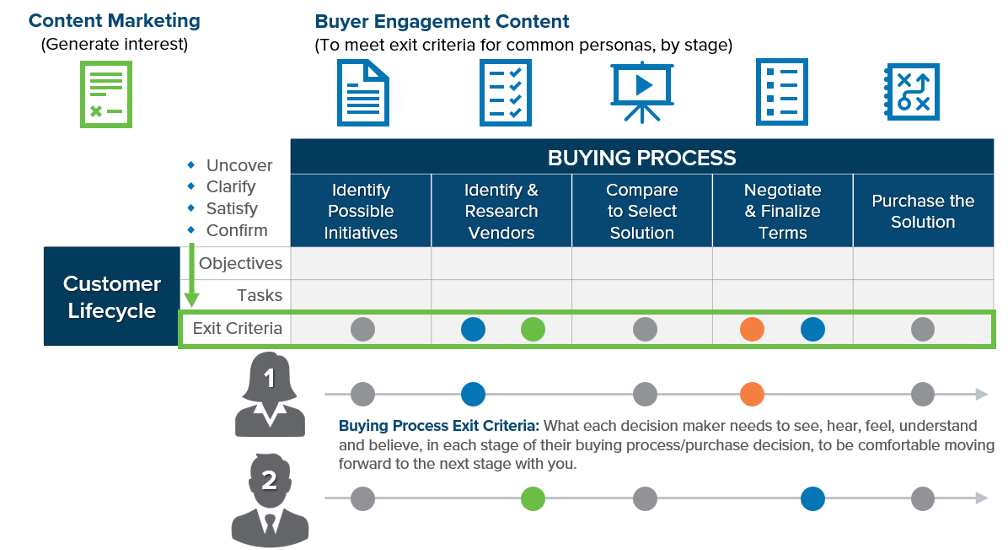
Pipeline stages are useful, in fact, critical. But they’re not enough. In addition to managing their own sales process, thinking sellers also manage buying process exit criteria by decision-maker per stage. They work to uncover, clarify, satisfy, and confirm satisfaction (a step often missed) of what each stakeholder needs to see, hear, feel, understand, and believe to move forward, and they plan conversations accordingly. Sometimes as a group, sometimes individually, but always all four steps.
This proactive approach reduces deal slippage, increases forecast accuracy, and improves win-rates.
What do average and below-average reps do? They do the same thing in each stage, the same way, with every buyer. Obviously, this sometimes works, too, which superstitiously reinforces the belief that they’re doing the right thing. Thinking sellers know better.
They Resolve Concerns Through Empathetic Communication
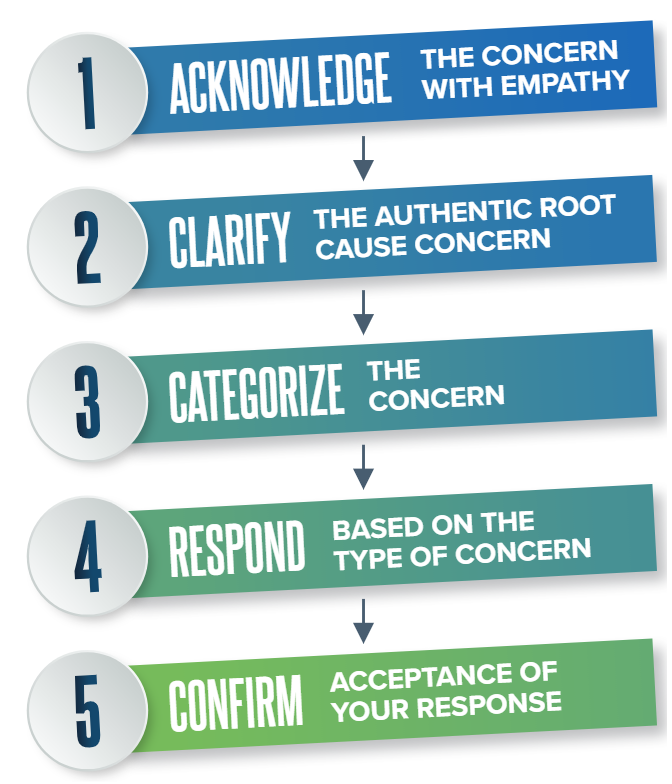
Objection handling is a horrible term, only bested by overcoming objections. So combative. Do you know any buyers who want to be “handled” or “overcome?” Resolving buyer concerns isn’t about clever comebacks. Thinking sellers engage in open, respectful dialogue. They explore concerns, ask clarifying questions, and co-create solutions. They don’t manipulate; they collaborate.
I once had a salesperson say to me (paraphrased), “You want me to ask them to explain more about their objection?? To go on about it? If feel like you want me to walk into a swinging fist.”
Yes. Yes, I do. Because we want them to get it all out and truly understand it. If you stay calm, don’t get defensive, empathize with their perspective (doesn’t mean agree), and ask curious questions, it changes the energy in the room. Then when you categorize the deeply understood concern, you can formulate the best response. Does this always work? No. Does anything? But it will radically improve your effectiveness.
This builds trust and keeps the conversation moving forward.
How to Build Thinking Sellers & Why It Requires Change Management

Developing thinking sellers isn’t a quick fix. It’s a strategic transformation that requires a shift in mindset, methodology, and enablement practices.
Most sales organizations are wired for execution. They train reps to follow steps, use tools, and work to hit metrics. But teaching reps to think critically, adapt, and communicate with nuance demands a different approach.
It Starts with Enablement That Teaches & Supports Thinking
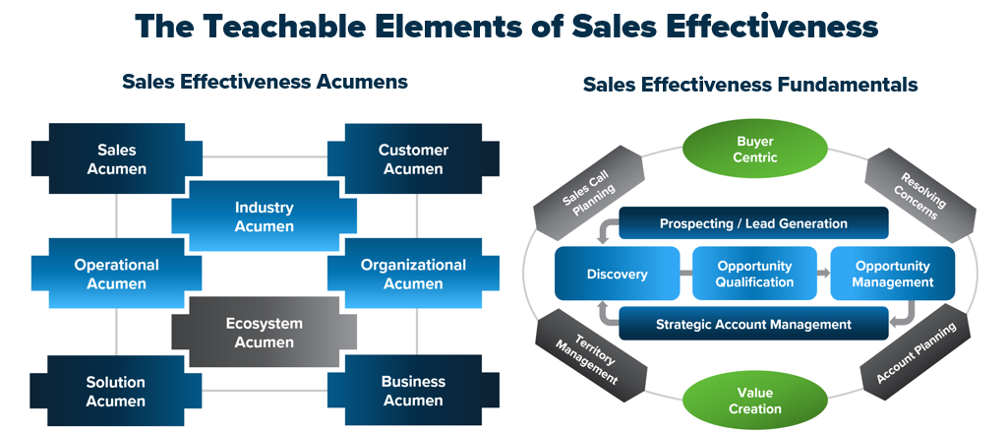
- Move beyond “what to say” and focus on “how to think” and frameworks and models that support effective, buyer-centric (human) communication.
- Use scenario-based learning, guided reflection, and real-world problem-solving exercises.
- Reinforce frameworks and communication models like COIN-OP, NASA, POSE, ACC, Value Drivers, and others discussed here through spaced learning and ongoing coaching to mastery.
This isn’t about replacing playbooks; it’s about elevating communication and how those playbooks are used. Thinking sellers use frameworks and models as tools as they navigate their sales process and playbooks, while guiding the buyers through their buying journey.
It Requires a Change Management Strategy
This purposeful and intentional shift doesn’t happen overnight. It requires:
- Leadership alignment: Leaders must champion the shift and model the behaviors.
- Manager enablement: Frontline managers must coach to thinking, not just activity or lagging indicators (results).
- Workflow and system support: CRM, KPIs, sales stages, sales enablement tools, and other jobs aids or tools must evolve to support these new, expected behaviors.
Change management principles also apply here. You’re not just teaching new skills, you’re changing how people think, act, and behave.
My Sales Training System can be very helpful for this.
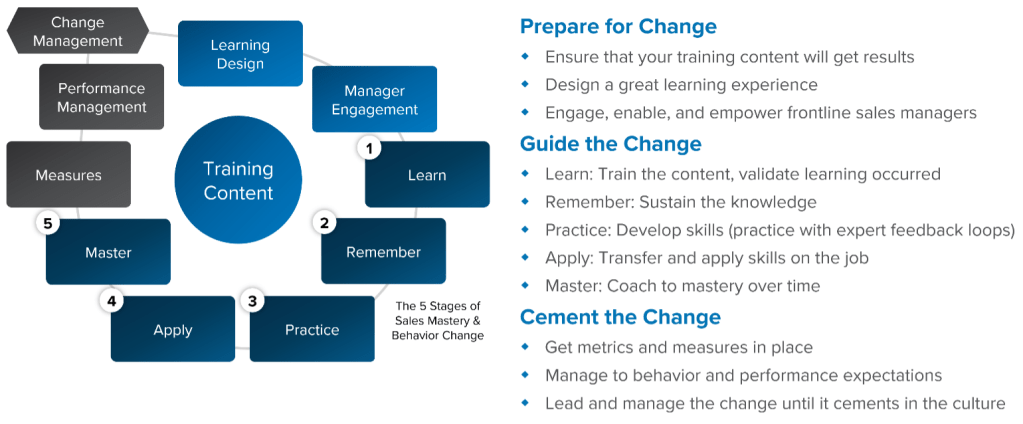
I’ve covered this multiple times elsewhere. See the Related Resources section for more on the Sales Training System and change management.
The ROI Is Real
When sellers make the shift:
- Win rates increase because reps diagnose before prescribing.
- Deal velocity improves because reps manage exit criteria and stakeholder alignment.
- Buyer trust deepens, leading to larger deals and longer relationships.
- Forecast accuracy improves because reps qualify with sensitivity and clarity.
Thinking sellers don’t just sell more, they sell better. And that drives measurable, sustainable growth. Immediate? No. Worth it? Absolutely.
It’s also an effort toward future proofing your sales force because this is the future of selling, unless you want to be replaced by AI.
Closing Thoughts: A Smarter Path Forward
If your sales team is “doing everything right” and still losing deals, it might be time to rethink what “right” looks like. Teaching reps to think—not just execute standard fare methodology—can be your competitive advantage.
Modern Sales Foundations was built with this philosophy in mind. It’s not about scripts or techniques. It’s about enabling strategic, caring, problem-solving, buyer-centric conversations that drive results.
This isn’t a pitch. It’s a call to rethink how we develop sales talent. Because in today’s complex B2B world, the best sellers aren’t the ones who follow the playbook. They’re the ones who know how to execute it more effectively and when to rewrite it.
If you’re rethinking how your team sells, and you want to build thinkers, not just doers, I’d be happy to share more about what’s working.
Related Resources
This post was originally published as a LinkedIn newsletter here.

Previous
Next