

B2B Sales Hasn’t Changed For The Top 4%


“For the top 4% of B2B salespeople, selling has not changed as much as it has for the rest.”
Mike Kunkle
Wait… what? How is that possible?
- Information is available everywhere
- Buying committees are larger
- Buying cycles are longer
- Fear of Messing Up (FOMU) is now greater than Fear of Missing Out (FOMO)
- Buyers are tired of “sales techniques” and seller behavior
In addition, modern B2B buyers want to work with sellers who:
Help them solve problems and get desired outcomes
Have their best interests at heart (buyer-centric)
Bring insights and expertise to the table!
Are trustworthy with integrity
Understand them and their company
Communicate well with their executive decision makers
What Buyers Expect vs. What They Get

And this is exactly my point.
Buyer-centric consultative selling is what has differentiated the top 4% of B2B salespeople since the seventies (and probably earlier) when Mack Hanan published his first edition of “Consultative Selling: The Hanan Formula for High Margin Sales at High Levels.”
Some Personal Background
I started my sales career in Q3 of 1984, working in B2C inbound, inside sales. I was promoted to B2B outbound, inside sales in early 1985. Like most at that time, my early years in sales were shaped by all the popular practices of the day, some of which were definitely on the manipulative side, or what I’ve come to jokingly call “The Jedi Mind Tricks of Sales.”
- Me, back in the day: “Mr. Prospect, let me ask you something. And this is a real question. If you walked out your front door right now and saw $300 lying on your porch, would you bend down and pick it up? Yes, or no?” [Pause for the Yes answer.] “Exactly. Of course you would. And that is what I’m trying to do for you – put $300 back in your pocket – Every. Single. Month. Now, knowing that, doesn’t it make sense to spend just a few minutes together to explore how we can do that?”
I absorbed tape sets, books, advice from mentors, and practiced all the tips and tricks I learned. I recorded myself on audio and video and role-played with colleagues.
- Me, back in the day: “Not interested? Of course not! How could you be – you haven’t even heard how I can help you yet. But let me ask you this…”
And then, one year, over the course of a few months of searching local libraries for new books, I happened to come across books by Mack Hanan (Consultative Selling), Ron Willingham (Integrity Selling), and Linda Richardson (Stop Telling, Start Selling).
Compared to the contemporary selling practices of their time, or at least what I had been exposed to, the approach from these authors was a fundamental shift from transactional, product-focused selling to relationship-driven, customer-focused, value-based selling, or as Mack Hanan called it, “consultative selling.”
Traditional, Transactional Selling Practices
The common methods of the day were:
- Product-centric: Emphasized highlighting product features and benefits and closing the sale quickly.
- Transactional: Focused on individual sales and achieving short-term quotas or targets.
- Seller-centric: The salesperson held the information and controlled the sales process.
- Persuasive and manipulative: Employed techniques to convince customers to buy.
The Consultative Selling Approach
This novel approach I learned about was:
- Customer-focused: Prioritized understanding of customer needs and problems.
- Relationship-driven: Aimed to build long-term relationships and foster customer loyalty.
- Value-based: Focused on helping customers make profitable business decisions and achieving positive outcomes.
- Collaborative: Involved partnering with customers to find solutions to their challenges.
Specific Differences
- Ron Willingham (Integrity Selling): Emphasized honesty, sincerity, and ethical behavior in sales, focusing on building trust and rapport with customers. His selling system (Approach, Interview, Demonstrate, Validate, Negotiate, Close) centered on understanding customer needs and creating mutual value.
- Linda Richardson (Consultative Selling, Dialogue Selling): Advocated for a conversational approach where the salesperson listens actively, asks insightful questions, and positions solutions based on the customer’s needs and context. Her approach stressed building rapport, questioning effectively, listening attentively, positioning solutions strategically, and checking for understanding.
- Mack Hanan (Consultative Selling): Focused on helping customers achieve quantifiable outcomes and profits by aligning the salesperson’s offerings with the customer’s cash flow objectives and delivering a strong return on investment.
These consultative sales pioneers recognized a needed shift in the sales approach and advocated for a more customer-centric and value-driven approach to sales, moving away from the more traditional, aggressive tactics focused solely on product features and closing deals. There were others, but there was no Internet at the time, and no Amazon, so my exposure was limited.
I didn’t know it at the time, but the concept of needs-based selling had also emerged at Xerox Learning Systems between 1968 and 1973 and would later evolve into the Professional Selling Skills course (widely known as PSS) at Learning International. (On a fun note, I was certified to teach PSS in 1995 and taught it dozens of times, across the country.)
This introduction to integrity-based, needs-based, consultative selling was a real wake-up call for me. I was amazed to learn that these methods had been around for years before I started selling. I began to radically transform my approach toward selling and got far better results.
Top-Performer Analysis (Sales & Sales Managers)

Eventually, after selling B2C and B2B and managing two sales teams, I shifted to sales training and sales performance improvement roles and began to train others. I had heard about sales research studies and became enamored with the idea of studying the top-performing salespeople and sales managers, to determine what it was that they did differently than the rest, to be the best. I called this Top-Performer Analysis (TPA). I did TPA at each employer (and later for clients when I was consulting).
If you haven’t already guessed this, I score high on the Nerd/Geek/Dork test (Nerd, mostly). I talked with university professors, researchers, experts in statistics, and other performance improvement professionals, and established a process that included executive discussions, formulating hypotheses, conducting branched surveys, individual interviews, and focus groups – with both sellers and frontline sales managers – and got help to analyze the data at various points to both inform the next step and ultimately find patterns of behavior that were statistically validated, as much as possible for a corporate project (vs. academic research).
On a side note, for any sales or revenue enablement readers, I learned that you can’t go into detail about TPA with the average senior sales leader or executive, without enduring eye rolls and yawns. The work itself is important, but how you talk about it to leaders and the level of detail you share are very dependent on the individual leader. That’s experience talking. Forewarned is forearmed.
Over a 16-year period, I conducted a dozen Top-Performer Analyses of various sizes, including both B2B sellers and frontline sales managers in a variety of vertical industries. The smallest was for a team of thirty people and the largest was for a sales force of 6,000. The goal in each was to identify the differentiating behaviors of the top performers – what separated the best from the rest.
Over those 16 years, a lot changed in the market, economy, society, technologically, and even with B2B buying behavior. But the consistent patterns of behaviors in top sellers changed very little. They had already evolved, way ahead of buyers’ expectations and certainly lightyears ahead of the average salesperson.
What I did observe over time, is that the behaviors of the rest of sellers (below the top 20%, at least), got further and further away from what buyers wanted, as buyers’ expectations increased.
Enter, Modern Sales Foundations

When I joined SPARXiQ in December of 2018 (which was then SPA and SPA Sigma, which merged into SPARXiQ later), I was tasked with working with a colleague to develop a sales training course. My partner added to my methodology and helped evolve it, but I already had the IP from the years of doing TPA, and from having previously created what I called my Buyer-Oriented System (yes, BOSS).
Today, at SPARXiQ, under the umbrella of our training brand, Modern Sales Foundations – which doubles as the name of our flagship course – we have an entire full-cycle, buyer-centric selling system and training program based on the Top 4% B2B sales behaviors, further modified by what buyers now expect in 2025.
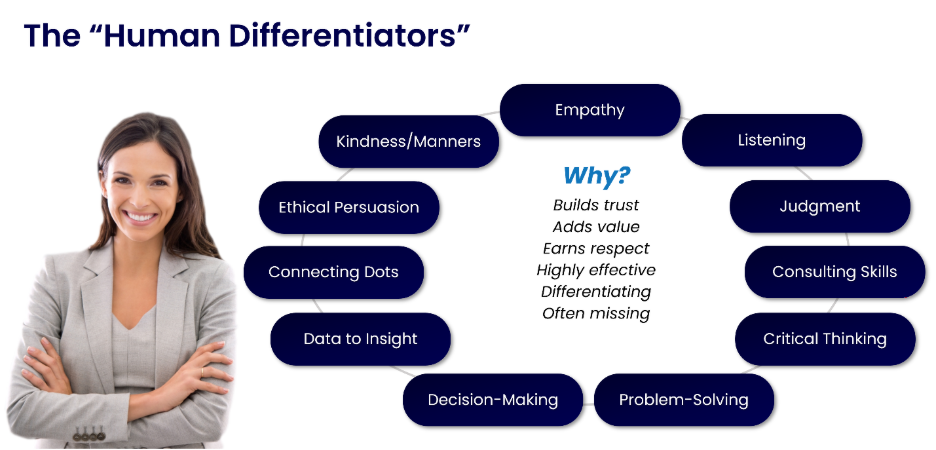
There’s no “closing” or “handling” or “overcoming objections” or other silly “Jedi Mind Tricks” of manipulation. That said, it does include elements of ethical persuasion, as needed – once it’s clear that the salesperson can help the buyer and is operating in the buyer’s best interest. But otherwise, it’s simply great, other-centric, empathetic, human communication (the “human differentiators,” as I call them) focused on solving problems and helping buyers achieve their desired future state outcomes.
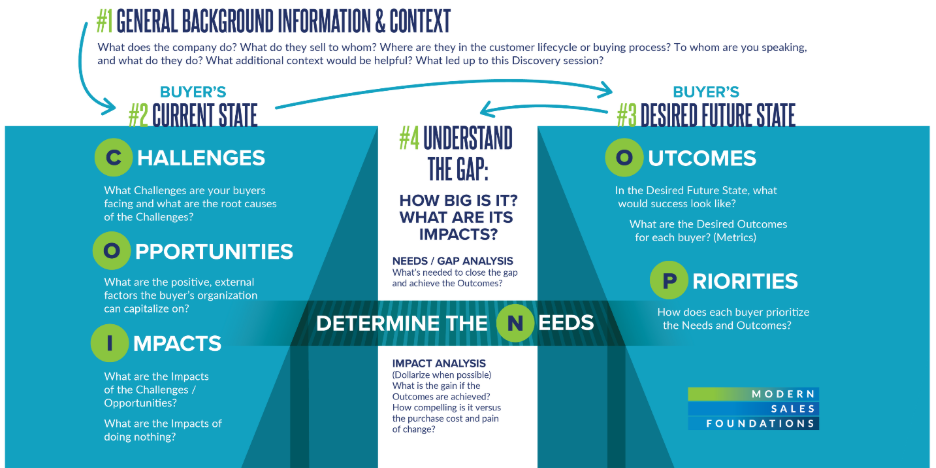
It’s based on deep understanding, Need And Solution Alignment (NASA – we say you can’t “launch” a sale without it), and co-creating and communicating value from the buyers’/customers’ perspective.
The program also incorporates the best of instructional design thinking – bite-sized learning, spaced repetition, retrieval learning, and practice with feedback loops. It also engages and prepares frontline sales managers to lead weekly reinforcement sessions and coach.
Materials include content summaries and worksheets, which we designed to help learners bring the concepts they learn in the videos into their world and prepare to use what they learn.
There is no rote learning, and with one exception, no scripts. We teach sellers to think and apply frameworks and models and to develop new skills. We do that through entertaining, episodic videos (I call it “Seinfeld for Sales”) that are more like a combination of a late-night show and a Netflix episode with an After Show than standard training. We also roll it out over a 34- to 36-week time frame – which is radically different – but highly effective. It clearly works:

Closing Thoughts
So, that’s my story and I’m sticking to it. B2B selling really hasn’t changed that much for the top 4% top performers. They’ve been selling in a more buyer-centric, consultative, value-focused, and outcome-oriented way for years. Most others, unfortunately, have not.
If you’d like to explore elevating and optimizing your sales force to move away from typical “sales techniques” and sync with what buyers expect (and what the top 4% have done for years), reach out here and I’ll get you a preview.
Related Reading
- Is Sales Training Customization Really Necessary?
- How One Simple Sales Methodology Model Can Improve Your Sales Results
- Can Virtual Sales Training Really Move the Needle Better Than Classroom Training?
- How to Ensure Sales Methodology Coverage Across Your Customer Lifecycle
- Stop Using Sales Techniques and Start Communicating Authentically!

Previous
Next