

11 Reasons Why Sales Training Fails and How to Get an ROI

Sales training frequently fails to deliver measurable results, causing many to doubt its potential for success.
Introduction
This is why so many view sales training as “nice to have” or something kind to provide for their sales teams when times are good.
Even then, some sellers and front-line sales managers bemoan “time away from the job” because they don’t see training as an investment in their growth or success. It’s why, especially in softer markets, leadership puts training “on the back burner.”
This is unfortunate, and while I disagree with the thinking, I truly do understand it. But when times are tough, you don’t just need your sales force to do as much selling as possible (efficiency), you need them to maximize every possible opportunity for growth (effectiveness).
This year marks my 40th year in the sales profession and the 30th in a sales performance improvement role, helping companies get better results from their sales force. As the creator of “The Building Blocks of Sales Enablement” and author of the book of the same title, I know a framework and systems are needed to drive better sales results. I know that “it takes a village” to improve organizational performance. It requires cross-functional alignment, a strategic plan, tactical go-to-market (GTM) plan, and great execution.
But make no mistake about it, I also have seen tremendous growth from the right sales training that was well executed.
In this article, I will detail the reasons why sales training fails, and how to get a significant return on your sales training investment.
Why Sales Training Fails
1. Poor Hiring Practices
Hiring the wrong people for sales roles is a fundamental issue that no amount of training can fix. When organizations hire individuals who lack the necessary traits, skills, or motivation for sales, training becomes a band-aid solution. Effective salespeople need a blend of resilience, empathy, and drive, as well as the right sales competencies. The skills can be trained, but without the right core attributes even the best training programs will fall short.
Our partner, Objective Management Group, reviewed more than 100 in-depth sales team assessments and found that 64% of companies have more than half of their salespeople in the wrong role. Furthermore, only 43% of the 5,323 salespeople assessed were in their best role.
- Read more here: Role Misalignment: The Sneaky Problem That’s Sinking Your Sales Org – Objective Management Group
While this isn’t something that most sales enablement or sales training professionals can fix, other organization leaders can. It bears keeping in mind so the training can be as successful as possible. It also ensures the training doesn’t take the blame for a lack of success when it was not the reason for the shortfall.
With that said, here are the other ten reasons that are within control.
2. Sales Training Won’t Fix the Performance Issue
Training is often seen as a quick fix for deeper performance problems. However, if the root cause of poor performance lies in systemic issues, such as misaligned incentives, poor leadership, lack of coaching or support, or inadequate tools, training alone will not suffice. It’s crucial to diagnose and address these underlying root cause issues before expecting training to yield results.
3. Wrong Content (Won’t Get Results, If Used)
Content that is not aligned with the challenges and needs of your sales team and customers will fail to produce results. You must know that the selected training course has been proven effective and will produce results. You can do everything else right, but if the content won’t produce results, your training will fail.
In today’s environment, a sales methodology must be modern, buyer-centric, consultative, value-focused, and outcome-oriented to work.
4. Poor Learning Design/Experience
A poorly designed training experience—whether live, virtual, or self-directed—can disengage participants and fail to impart necessary skills. Training should be interactive, engaging, and tailored to the content, audience, learning objectives, and expected outcomes. Without a well-thought-out design, even the most relevant content can fall flat.
Many training programs cram too much content in too little time, leaving no room to absorb, practice, receive feedback, and prepare to use new skills with buyers or customers.
On the other hand, as Claude “Butch” Lineberry is quoted as saying, “A hungry dog is not prevented from eating by the color of the bowl.” Meaning, if the salesperson is motivated and wants to learn and grow, they may navigate through poor learning and take something away from it. But do you really want that wish to be your “strategy?” I hope not – but it does point out that even great learning design may not produce results with unmotivated students. This harkens back to my comments about hiring. Put the right students in a well-designed learning experience with content that will work, and you are well on your way toward improved results.
5. No Knowledge Sustainment Plan
Learning decay or “the forgetting curve” is a real phenomenon. Without a plan to reinforce and sustain the knowledge gained during training, participants will quickly forget what they’ve learned. Regular follow-ups, quizzes, refreshers, practical applications, and – of course – coaching, are essential to ensure that training has a lasting impact.
6. Too Few Skill Practice/Feedback Loops
Sales skills are honed through practice and feedback loops. Training programs that lack opportunities for role-playing, simulations, and real-time feedback – either during the learning experience or very soon thereafter – will not effectively develop the skills and confidence to use them. Continuous practice and constructive feedback are critical for mastery.
7. No Purposeful Transfer Plan
Training must be designed with a clear plan for how new skills and knowledge will be applied on the job. Without a purposeful transfer plan, participants may struggle to integrate what they’ve learned into their daily routines and just continue to do what they’re currently doing. This plan should include specific actions, timelines, and support mechanisms.
8. No Coaching to Mastery
Ongoing coaching is essential to help salespeople refine their skills and achieve mastery. Training should be complemented by regular coaching sessions where sales managers provide guidance, support, and accountability. Without this, initial gains from training can quickly dissipate. If you want transfer (application), adoption (continue to use it), and mastery (doing it very well), congoing coaching is crucial.
9. No Measurement Plan (Learning or Sales)
Without a robust measurement plan, it’s impossible to gauge the effectiveness of training. Organizations need to track both learning outcomes (e.g., knowledge retention, skill acquisition) and business outcomes (e.g., sales productivity, sales velocity, conversion rates, win rates, etc.). Consider documenting and tracking lead and lag indicators for both. This data is crucial for continuous improvement and demonstrating ROI. It’s also helpful to diagnose where breakdowns occurred, when you do not initially get the results that you were hoping for.
10. No Performance Management/Accountability
According to one of the Association for Talent Development’s biannual State of Sales Training reports:
59% of respondents reported that the single greatest barrier to sales training success was the inability to hold salespeople accountable to use what they were taught.
This is not a failure of sales enablement professionals or trainers. It’s a leadership issue. Training must be integrated into a broader performance management system that holds salespeople accountable for applying what they’ve learned, and their managers accountable for ensuring they do and coaching them. Clear expectations, regular performance reviews, and consequences for non-compliance are necessary to ensure that training translates into improved performance.
11. No Aligned Change Management Plan
Sales training, especially for a sales process or sales methodology implementation, often requires changes in behavior, processes, and culture. Without a comprehensive change management plan, these changes are unlikely to stick. This plan should address potential resistance, work to “win hearts and minds,” provide ongoing support, and ensure alignment across the organization.
By addressing these common pitfalls, organizations can significantly improve the effectiveness of their sales training programs and achieve a meaningful return on their investment.
How to Get an ROI with Sales Training
Is it possible to achieve a meaningful ROI from sales training? Yes! Here is just a sampling of client results from our Modern Sales Foundations program:
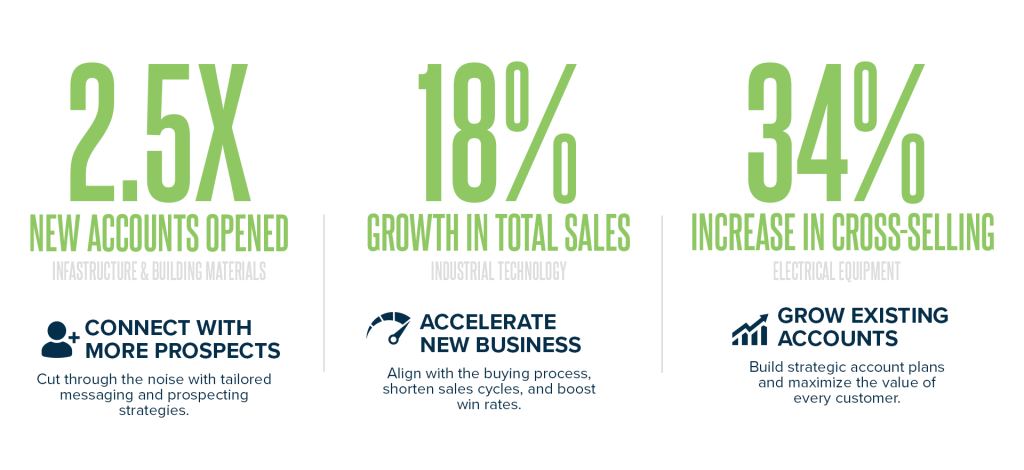
Many of the answers to these failure points are already embedded in the reasons why sales training fails, as discussed above. Based on my experience, I know that many readers may now feel that this is a massive and overwhelming task. But I assure you that this can be easier than you think. Stay with me until the end, and I’m confident you’ll see what I mean.
To address and resolve the reasons for sales training failure, I created my Sales Training System, which is part of The Building Blocks of Sales Enablement.
The Sales Training System

This system grew out of my efforts over many years to avoid the reasons why training fails and achieve great results. While it doesn’t address all the organizational and environmental aspects you can align to improve performance, it will produce the best possible results from the training itself. The system is divided into three sections: Prepare for Change, Guide the Change, and Cement the Change. Let’s walk through it.
PREPARE FOR CHANGE
In Prepare for Change, you address some of the reasons for failure by setting yourself up for success.
- Training Content: Content is central to the system because we need to ensure that your training content will get results. I recommend building or purchasing training that is based on an analysis of what top performers do differently.
- Learning Design: To ensure your salespeople have the best possible chance of learning, design a great learning experience based on sound instructional design principles that mirror how people learn. If you build, hire or rent a great instructional designer. If you buy, ensure your provider can explain their approach and how it supports what we know about learning science.
- Manager Engagement: Managers must be engaged, enabled, and empowered to support the learning and their teams. They are a force multiplier and your best ally for adoption and change management. Managers must buy into the training, support it, understand it, and be fully prepared to reinforce and coach what is taught.
GUIDE THE CHANGE (5 Stages of Sales Mastery & Behavior Change)
- Learn:?The first step is to ensure that the sales team is properly trained on the content. This involves delivering the training in a way that is engaging and effective, ensuring that the material is understood. Validation of learning is crucial here, which can be achieved through assessments, quizzes, or practical demonstrations.
- Remember:?To prevent the forgetting curve from eroding the knowledge gained, it’s essential to have a plan for knowledge sustainment. This can include regular refreshers, microlearning modules, and access to resources that reinforce the training content. The goal is to keep the information top-of-mind and easily accessible.
- Practice:?Developing skills requires deliberate practice with expert feedback loops. Role-playing, simulations, and real-world scenarios provide opportunities for salespeople to practice new skills in a safe environment. Constructive feedback from trainers or peers helps refine these skills and build confidence.
- Apply:?The true test of training effectiveness is the ability to transfer and apply skills on the job. This stage involves integrating new behaviors into daily routines and ensuring that salespeople have the support they need to apply what they’ve learned. This might include job aids, checklists, or ongoing mentoring.
- Master:?Mastery is achieved through continuous coaching and development. Sales managers play a critical role in this stage by providing ongoing feedback, setting performance goals, and helping salespeople refine their skills over time. Regular coaching sessions and performance reviews ensure that the new skills are fully embedded and consistently applied.
CEMENT THE CHANGE
- Get Metrics and Measures in Place:?To understand the impact of the training, it’s essential to establish clear metrics and measures. This includes both leading indicators (e.g., training completion rates, knowledge retention scores) and lagging indicators (e.g., sales performance, conversion rates). These metrics provide insights into the effectiveness of the training and areas for improvement.
- Manage to Behavior and Performance Expectations:?Setting clear behavior and performance expectations is crucial for sustaining change. Salespeople need to know what is expected of them and how their performance will be measured. Regular performance reviews and feedback sessions help ensure that these expectations are met and maintained.
- Lead and Manage the Change Until It Cements in the Culture:?Change management is an ongoing process that requires strong leadership and consistent effort. Leaders must champion the change, communicate its importance, and provide the necessary support to ensure it sticks. This includes addressing resistance, celebrating successes, and continuously reinforcing the desired behaviors until they become part of the organizational culture.
Closing Thoughts
Sales training is often misunderstood and undervalued, especially during challenging times. However, this perspective overlooks the significant impact that well-executed sales training can have on performance and growth, especially when increased sales is a priority.
“If salespeople don’t change something about how they sell, nothing will change about how much they sell.”
-Mike Kunkle
By addressing the common reasons for training failure, organizations can transform their sales training programs into powerful tools for driving success. It’s about more than just delivering content; it’s about creating a comprehensive system that supports learning, application, and mastery.
Investing in sales training is a strategic move that pays dividends in the form of improved sales performance, improved pipelines, higher win rates, account growth, and, ultimately, increased revenue. When approached with the right mindset and a robust plan, sales training can become a cornerstone of your business strategy, delivering results that justify the investment many times over.
With the right approach, you can ensure that your sales training efforts yield a significant return on investment, driving long-term success for your organization.
Resources
- Ready to transform your sales training into a powerful tool for success? Get our free guide to our Sales Training System: Download the PDF now.

Previous
Next